Posts By :

Sarah Clements

Hotel Fire Risk Assessment: What To Include

Hotel Fire Risk Assessment: What To Include 1000 667 James Hallam

We recently published a guide to some of the emerging risks that hotels must contend with in the coming years. Yet no matter what challenges the next few years bring, there is one risk that hotels will always have to contend with: Fire.

In this post we will explore the fundamentals of a hotel fire risk assessment plan, to help you understand and mitigate the fire hazards in your hotel.

Hotel Fire Risk Assessment: Understanding The Risks

When it comes to fire, hotels and B&Bs are considered high risk premises. This is because of the presence of temporary guests who will not be familiar with the building’s layout and fire safety procedures.

The building’s fire safety systems will need to be capable of alerting multiple people at the same time – many of whom may be asleep – while helping them to navigate an unfamiliar environment to safety.

The fire safety plan must also account for how some guests may have certain mobility impairments. Plus, some may not speak English, and some may be under the influence of alcohol.

Because of these unique risks, The Regulatory Reform (Fire Safety) Order 2005 specifies that any building where guests sleep for payment must have a written fire risk assessment in place, which must be reviewed regularly. This extends to hotels, guest houses, B&Bs, hostels, and serviced apartments.

What To Include In Your Hotel Fire Risk Assessment

  • Identify All Possible Fire Hazards – Depending on your facilities, this might include kitchens, laundry facilities, and electrical systems. You should also factor in accidental fires caused by guests (due to appliances they bring with them, and discarded cigarettes), along with the risk of arson.
  • Identify Who is At Risk – Beyond your guests, you will also have to account for the safety of your staff, to contractors and delivery drivers, and to members of the public who might be visiting the premises temporarily – such as those who eat at your restaurant without staying the night.
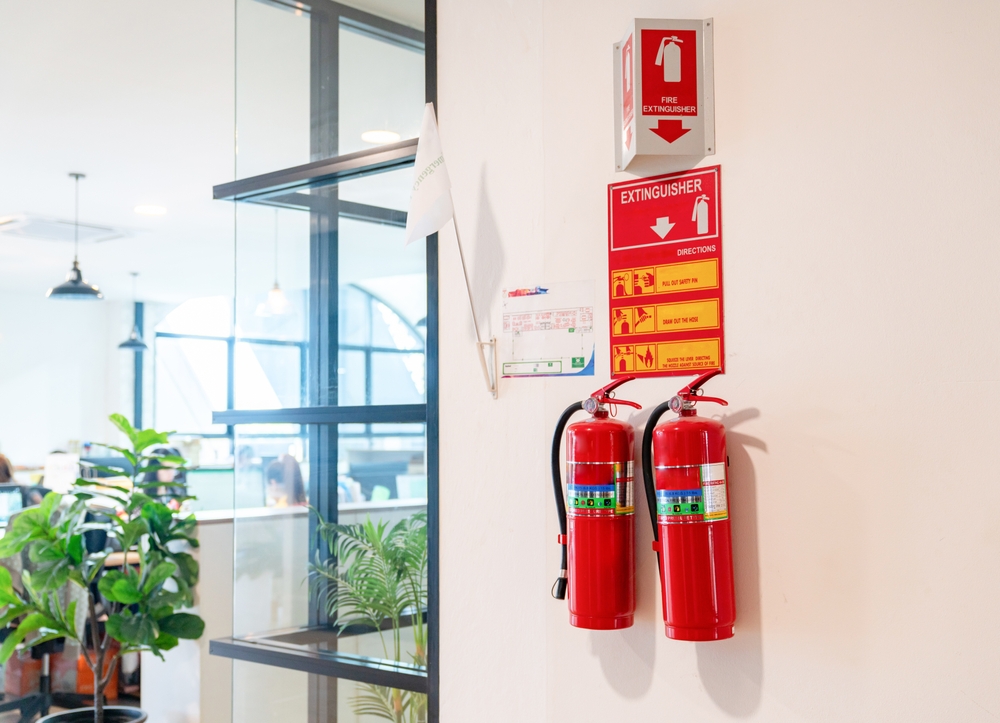
  • Outline Your Existing Fire Precautions – What have you currently got in place to alert staff and guests, to help them evacuate, and to contain or control a fire outbreak? This might include fire alarms, emergency signage and lighting, fire doors, and firefighting equipment.

How to Devise Your Action Plan

Once you understand your risks, and the measures that are currently in place to address them, you might identify some areas for improvement. This might include:

  • Ongoing staff training, to ensure they understand the risks, and the actions they are to take if an alarm is raised.
  • Routine inspections of your fire safety equipment, and replacement of any perishable items as often as necessary.
  • Specifying who is responsible for every action, with a target completion date for any changes or improvements you wish to make.
  • Reviewing your action plan at least once a year, or immediately following any fires or alarms (even if they are false alarms). You should also review your plan should you ever make any changes to your hotel building or operations.

Other Risks For Hotels

Beyond our guide to the emerging risks for hotels, you will find a number of guides on our site to help you understand and mitigate the various risks associated with running a hotel business:

Get the Tailored Hotel Insurance You Need

Specialist hotel insurance can cover your hotel against many of the risks you will face, including fire risks.

James Hallam is an independent Lloyd’s broker with a dedicated team of experienced insurance brokers. No matter if you are running a large or a small hotel, we can tailor a niche insurance package to ensure you are covered for all risks at the best possible price.

Find out how we can help you today.

Gym Risk Assessments: Hazards in a Gym to Mitigate

Gym Risk Assessments: Hazards in a Gym to Mitigate 1000 640 James Hallam

Gym risk assessments are essential for keeping your staff and your members safe from the many hazards present in health and fitness facilities. In this post we will outline the fundamentals of a gym risk assessment, including your legal duty to keep people safe.

You Have A Legal Duty To Manage Risk In Your Gym

Under the Health and safety at Work Act etc. 1974 and the Management of Health and Safety at Work Regulations 1999, if you own or operate a gym you have a legal duty to assess and manage all health and safety risks.

A gym risk assessment will help you understand all the potential hazards in your gym, and who is at risk. It will also help you identify your current capacity to manage these risks, along with any new measures you should introduce to help keep people safe.

Gym Risk Assessment Basics

How to Identify The Hazards in a Gym

The first step of any risk assessment is to identify all the potential hazards in your gym.

These might include:

  • Environmental Hazards – Such as slippery or uneven floors, poor lighting, trailing cables, blocked walkways and emergency exits, and issues with noise levels, temperature, and ventilation. You should also consider hygiene hazards from contaminated or poorly maintained equipment and facilities, and chemical hazards from improper use or storage of cleaning equipment.
  • Equipment Hazards – Staff and customers alike could injure themselves through inappropriately moving or using equipment. If any of your equipment is damaged or faulty, then it could cause injuries even if people do use it correctly.
  • Fire Hazards – Identify all possible sources of fires, paying particular attention to your electrical equipment. Also identify your current means of detecting and managing fire outbreaks, and your current means of alerting staff and customers, and helping them evacuate.

How to Identify Who Is At Risk

For every hazard you identify, you should specify exactly:

  • Who might be harmed
  • How they might be harmed
  • How likely it is that they will be harmed

Beyond your staff and your customers, think about other members of the public who may visit your premises, including contractors, delivery personnel, and emergency services staff.

Ways to Mitigate Risks in a Gym

Once you have determined the hazards in your gym, along with who is at risk, and the possible severity of the harm, it is time to determine the precautions you are going to take to mitigate these risks:

  • Ongoing staff training, to help them understand all the hazards, along with the procedures they will follow in the event of an incident.
  • Adequate staff-to-member ratios, so that your staff can identify and respond to any emerging situations as early as possible.
  • Thorough induction processes for all new members, along with routine refresher sessions for more experienced members.
  • Regular cleaning and maintenance schedules for all equipment, with a procedure for removing, repairing, or replacing any faulty or damaged equipment the moment you spot an issue.
  • A thorough cleaning schedule for the whole gym environment, so as to clear areas of trip hazards while addressing any potential health issues arising from poor hygiene practices.
  • Environmental controls, including ensuring there is adequate space between equipment to avoid collisions and overcrowding, while also addressing noise levels, temperature levels, and ventilation issues.
  • Emergency protocols, including the availability of first aid and defibrillator kits, and ensuring that your staff know how to use them. You should also have a fire response plan in place, and you might also consider drilling your staff on responding to aggressive members, or potentially violent situations.

Special Measures and Additional Risks For 24 Hour Gyms

If your gym is open round the clock, then you might have to consider some additional risks. For example, there will likely be times when your gym will be unsupervised. It is therefore vital that all members know how to take care of themselves when they are using the gym out of hours, including the procedures for responding to emergency situations.

You can read our full guide to risk management for 24 hour gyms.

Your Written Gym Risk Assessment

Ultimately, your gym risk assessment will need to be a written document which clearly outlines every hazard you have identified, and how you intend to manage them. It should also specify who is responsible for carrying out every action you have proposed, along with a target completion date for every improvement you wish to make.

You should aim to review your risk assessment at least once a year, or immediately following any incidents – even if these incidents were just “near misses”.

Keep Good Records And You Could Save On Your Insurance

As we mentioned above, you have a legal duty to assess and manage all health and safety risks in your gym. Good record keeping is essential. But beyond keeping your staff and members safe, your risk assessment process could ultimately benefit you in other ways too.

If you can evidence your gym’s risk management procedures, you may be able to make a saving on the cost of your gym insurance.

James Hallam is an independent Lloyd’s broker with access to a hand-picked selection of A-rated insurance providers. We can help you understand the unique risks you face as a gym, and we can show you how to properly evidence your risk management procedures in order to access specialist at a competitive price.

Find out how we can help you today.


A Guide to Risk Management For Small Businesses

A Guide to Risk Management For Small Businesses 1000 667 James Hallam

As a small business owner, you have a legal duty to keep your employees safe, along with any customers, contractors, or other members of the public who may visit your premises. Risk management is an essential process for understanding the risks you are facing, along with the steps you can take to address them.

What Is Risk Management?

Risk management is a process that involves taking the time to identify and assess every risk that your SME may be facing. Some of these risks will be the sort that any business of any size will have to contend with, such as fire hazards and workplace accidents. Other risks may be specific to your industry – a warehouse is a more hazardous workplace than an office, for example.

But SMEs may have to contend with some risks that may not be so much of a problem for larger businesses. For example, cybercrime. One study found that cybercriminals are three times more likely to target SMEs over larger businesses. Another suggested that around 96% of all cyberattacks target SMEs.

Risk Assessments For Small Businesses

Risk management starts with a thorough risk assessment. There are a few steps to go through here:

  • Identify every risk that could lead to accidents, injuries, or other damages to your business.
  • Determine who each risk may affect, along with the likelihood and severity of every risk you identify.
  • Outline the steps you can take to manage, mitigate, or eliminate these risks.
  • Establish who is responsible for carrying out each action you identify, along with a process for reviewing your risk assessment.

Essential Aspects of Risk Management For SMEs

Your risk assessment will help you identify the risks your SME is facing, along with the actions you might take to manage them. This might include:

  • Staff Training – Every new member of staff should go through a thorough induction process to help them understand the various workplace risks, and how to manage them. You should also brief them on how to respond to emergency situations. Existing staff should receive refresher training at least once a year.
  • Fire Safety – You should have a fire safety system in place, including alarms, sprinkler systems, fire fighting equipment, and emergency lighting and signage. You should also outline your fire response procedure. In the event of a fire, what steps should employees take? How should they evacuate the building, and who should they report to once they are safe?
  • Onsite Security – As well as addressing the risks of fire, you should also address the risk of theft, vandalism, and other crimes. This can involve security features such as CCTV, roller shutters, and alarm systems, and anti-theft policies such as thorough stock-taking and anonymous reporting procedures.
  • Employee Health and Safety – At least one member of staff should have first aid training, and every member of staff should know the process for reporting and recording incidents at work.

Cyber Risk Management For SMEs

As we mentioned above, SMEs may be at greater risk of cybercrime than larger businesses. Increasingly, IT and cybersecurity are becoming essential aspects of risk management for small businesses.

Cyber risk management starts with staff training. Every member of staff should be aware of the risks, along with the steps they should take if they ever encounter any suspicious activity. You should also take steps to secure your systems, paying particular attention to any employees who work remotely.

Read our full guide to cyber security for SMEs.

Get Tailored Insurance For Your SME

James Hallam is an independent Lloyd’s broker with access to a hand-picked selection of A-rated insurance providers. We can help you understand the unique risks your business is facing, and we can show you how to effectively manage these risks. We can then help you access the dedicated business insurance you need, at the best price.

Get in touch for a free quote today.


Do I Need a Boat Safety Certificate?

Do I Need a Boat Safety Certificate? 1000 667 James Hallam

If you own a boat, then you have a responsibility to ensure it meets certain safety standards. A boat safety certificate can provide confirmation that your vessel is compliant with all relevant safety regulations.

What is a Boat Safety Certificate?

If your vessel has a boat safety certificate, it means that a qualified surveyor has inspected your boat to confirm that it meets various safety standards. Think of it as a boat equivalent of an MOT: It means your boat is safe for you, your passengers, and other waterway users.

To get your boat safety certificate, you will have to satisfy certain regulations concerning your boat’s:

  • Electrical systems, including wiring and batteries
  • Fuel systems, including gas systems
  • Fire extinguishers, alarms, and other fire safety equipment
  • Bilge pumps and drainage systems
  • Navigation lights, signals, and other emergency features

Who Needs a Boat Safety Certificate?

You will likely need a boat safety certificate if you want to take your boat on most UK canals, rivers, or waterways. And even if boat safety certificates are not required on your waterway, you may need to get a short-term visitor licence if you want to visit waterways where certificates are a prerequisite.

However, some boats are exempt from these requirements.

Boat Safety Certificate Exemptions

For example, you may not need a boat safety certificate if your boat does not have any gas, electrical, heating, or fuel systems.

Plus, a brand new boat may already comply with all relevant safety standards, and you may even receive a certificate when you purchase the boat.

However, if your boat is fully fitted, you will need to get a safety certificate after four years.

And if it is sail away, and you plan to fit it out yourself, then you will need to get a safety certificate after one year, even if you are still in the process of fitting out your boat.

How Much is a Boat Safety Certificate?

The amount you pay for a boat safety certificate will depend on the size and type of your boat, along with its condition. Different surveyors will charge different amounts, too.

You should expect to pay around £150 to £300 for the inspection and the certificate. But if the inspection reveals that your boat needs some additional work to meet the relevant safety standards, then the process will end up costing you some more.

How To Get a Boat Safety Certificate

To get a boat safety certificate, you will need to find a qualified examiner to survey your boat, and issue it a certificate.

It is important to choose a reputable examiner. Check the list of examiners registered to the official Boat Safety Scheme (BSS) to find a surveyor you can trust.

The BSS also lists the full requirements for your boat to get certified, along with the details of the examination and certification process.

Will a Boat Safety Certificate Affect My Insurance?

Some insurers may specify that you need a boat safety certificate as a condition of cover. If you are caught using a regulated waterway without a valid certificate, then it may invalidate your insurance.

As we mentioned above, a boat safety certificate acts as confirmation that your boat meets all relevant safety regulations. Certification proves that you take safety on the waterways seriously. So in some cases, a boat safety certificate could help you save money on the cost of cover, as it will demonstrate your commitment to safe boating.

Everard Insurance Brokers are the specialist marine trading division of accredited Lloyd’s brokers James Hallam Limited. We can help you ensure your boat meets all relevant safety standards, and we can help you access the specialist cover you need at a competitive price.

Find out more about our dedicated marine insurance services.


The Impact of Climate Change on Marine Insurance

The Impact of Climate Change on Marine Insurance 1000 562 James Hallam

A changing climate could create new risks for the marine insurance industry. This may affect the role that insurers play in covering marine businesses.

In this post we will examine the possible impact of climate change on marine insurance. We will also outline how you can ensure you continue to get the dedicated cover you need, no matter what the future may hold.

The Possible Impacts of Climate Change on Global Shipping

Some believe that a changing climate may:

  • Increase the frequency of severe weather at sea. Storm surges could also lead to coastal flooding, which could lead to disruption at ports.
  • Increase sea temperatures which could affect the speed of some currents. This could disrupt certain routes, while making others less reliable, or even more hazardous.
  • Melting Arctic ice has the potential to open new routes. Yet these routes could be hazardous and unreliable, as vessels would have to navigate around treacherous ice floes.

Any of these situations would create new risks for marine businesses, while also carrying a number of implications for the marine insurance industry.

How Could Climate Change Affect Marine Insurance?

Greater risks could lead to more claims. Insurers would have to contend with higher payouts, which would result in higher premiums for all.

To manage these risks, marine insurance companies could impose stricter coverage terms. They may turn to climate models to forecast possible extreme weather events, and to reassess the risks of certain routes. They may refuse to cover certain sea lanes and coastal areas if they become too unstable, or else charge a significant premium to cover the extreme risks.

On top of this, insurers may also start to specify climate-related exclusions in their policy. Or they may impose new risk management measures for policyholders. For example, there may be strict limits to the cover during any period with a high risk of extreme weather.

How to Keep Shipping Vessels Safe In A Changing World

There are a number of ways you can help to manage risks and continue to receive reliable cover, no matter what the future brings:

  • Stay on top of your maintenance routines, so that you will be able to depend on your vessels at all times.
  • Invest in crew training to help them deal with severe weather events, and other unpredictable situations.
  • Review your vessels’ navigation and safety equipment, and upgrade wherever necessary.
  • Use weather forecasting tools and other advanced apps to review your routes, and replan accordingly.

It will also help to notify your insurers of any changes you make to any of your vessels, and your operations. If you can evidence your risk management procedures, it may help to keep your marine insurance affordable in the face of rising premiums.

Get The Specialist Marine Insurance You Need From James Hallam

Everard Insurance Broker is the specialist marine division of accredited Lloyd’s broker James Hallam Limited.

If you are worried about how climate change may impact your operations, we are here to help. With our expert risk management support, we can show you how to manage your exposure. We can also help you access the specialist marine insurance you need to cover you for all risks, including any new or emerging risks linked to a changing climate.

Learn more about our dedicated marine insurance services.


Fixed Price P&I vs. Mutual P&I Clubs in Marine – What is the Difference?

Fixed Price P&I vs. Mutual P&I Clubs in Marine – What is the Difference? 1000 656 James Hallam

We recently published a guide to the vital role that protection and indemnity (P&I) clubs play in global shipping. P&I clubs help make the often-complex world of marine insurance more accessible and affordable for many operators.

In this post we will explore another insurance product that can help marine businesses of all sizes access the cover they need: Fixed-premium P&I facilities.

What is a Fixed-Premium P&I Facility?

With a fixed-premium P&I facility, shipowners and managers pay a pre-agreed premium that remains fixed for the entire policy year. They will not face any retrospective premium adjustments, and they will not have to make any extra payments on their policy for any reason. Instead, the price they initially agreed to pay will be the price they pay for the whole year.

Insurers can also tailor their fixed-premium P&I policies to meet the operator’s unique requirements. The policyholder can usually specify their cover limits, their deductibles, their specific trading areas, and their crew, passenger, or cargo liabilities.

Who is a Fixed Premium P&I Facility For?

The combination of a fixed price and tailored cover makes fixed-premium P&I facilities an attractive product for many operators. Fixed-premium P&I may be particularly useful for operators running smaller fleets, or those who trade in predictable, lower-risk environments. They can get precisely the level of cover they need at a set price, without having to pay for excessive cover they may never need.

However, fixed-premium P&I certainly is not for everyone. There may be some limits to the cover, making the policies unsuitable for operators who trade in higher-risk environments. For example, not all fixed-premium providers offer Freight, Demurrage, and Defence (FD&D) cover.

Fixed Price P&I vs. Mutual P&I Clubs – What is the Difference?

Mutual P&I Clubs, especially those within the International Groups (IG), operate on a different model. The most obvious difference is that their premiums are not fixed. But there are some key differences beyond this too.

Mutual P&I clubs are structured on a not-for-profit basis. They are owned by their shipowner members. These members elect a board, which oversees the club’s governance. Members also contribute premiums, which are known as “calls”. These premiums are added to a pool from which all members can draw to share the collective cost of claims.

This means that, in volatile years, members may need to pay extra premiums (known as “supplementary calls”) along with additional reserve contributions (known as “release calls”).

The mutual approach gives P&I clubs tremendous financial depth and operational reach. This includes access to the International Group Pooling Agreement, and one of the largest reinsurance programmes in the world.

Why Mutual Clubs Offer Far Higher Limits of Liability

Another big distinction between mutual clubs and fixed-premium facilities is the limit capacity.

Fixed‑premium facilities typically offer liability limits up to $100 million. Depending on the provider and the risk class, the liability limit can go as high as $500 million.

Compared to this, mutual clubs can offer almost unlimited liability protection. This is because their liability is backed by the mutual pool, to which all members contribute, along with some layers of overspill protection. They also have access to commercial reinsurers, if need be.

The Pros and Cons of Fixed-Premium P&I Facilities

As we mentioned above, fixed-premium facilities are ideal for operators running smaller fleets, or those who trade in predictable, lower-risk environments. They can guarantee flexible cover with tailored policies, budget certainty, and there is no mutuality risk. This means you will not be affected by major losses suffered by other members.

But due to the lower liability limits and the cover limitations, fixed-premium facilities are not suitable for all operators. Some operators will actively choose mutual clubs for the voting rights and policy influence. Plus, many charterers and ports require operators to be members of international groups, and will actively rule out operators involved with fixed price facilities.

Plus, mutual P&I insurers are far better suited for vessels with exceptionally high exposure, including:

  • Oil Tankers – Coastal states, charterparty contracts, and major oil companies typically require IG Club membership. This is because only mutual P&I Clubs offer the capacity needed to handle catastrophic environmental claims, as oil liabilities can run into the billions.
  • Cruise Liners – Cruise operators rely almost exclusively on IG clubs, as they offer a greater depth of cover for substantial passenger liability exposure, which can include cover for personal injuries, medical emergencies, mass casualty incidents, and repatriation.

How to Choose Is a Fixed Price P&I or Mutual P&I Club Is Right for You?

The choice often comes down to your priorities as an operator:

Choose Fixed‑Premium If You Want:

  • Cost certainty
  • Fast commercial responses
  • Tailored cover for a lower‑risk or restricted trading area
  • No exposure to mutual supplementary calls

Choose a Mutual P&I Club If You Need:

  • Very high limits of liability
  • Access to IG pooling and reinsurance
  • Compliance with tanker or cruise industry contractual requirements
  • Member‑driven governance and long‑term stability

For many small and medium‑sized operators, fixed premium is a strong and efficient solution.
For high‑risk sectors such as tankers, LNG/LPG carriers, and cruise liners, only mutual IG Clubs offer the required scale of cover.

We Can Help You Get Tailored Marine Insurance That Suits All Of Your Needs

Everard Insurance Brokers has long-standing relationships with both P&I Clubs and fixed-price insurers, ensuring clients receive tailored solutions that meet their operational needs.

Find out how we can help you today.


Types of Piracy at Sea & How to Mitigate Risk

Types of Piracy at Sea & How to Mitigate Risk 1000 577 James Hallam

Piracy is a significant threat for the global shipping industry. In this post we will examine some of the global piracy hotspots, before discussing some of the common types of piracy at sea. We will then explore how you can mitigate the risks of piracy for you, your vessel, your cargo, and your crew.

Highest Risk Piracy Hotspots

  • High risk areas: Gulf of Guinea (West Africa); Indian Ocean (East Africa); Gulf of Aden.
  • Medium risk areas: Strait of Malacca (Southeast Asia); Somalia (Horn of Africa); South China Sea.
  • Low risk areas: Caribbean Sea; Bay of Bengal.

If you trade in any of these areas, even if it is a “low risk” area, then piracy is a very real threat, and you will have to prepare accordingly.

Types of Piracy at Sea

All types of piracy have the same essential goal: To board your vessel for financial gain. Pirates will use a range of techniques to achieve this goal:

  • Surprise Attacks: Pirates may use small and fast skiffs to rapidly approach your vessel, before using ladders or grappling hooks to board. They may choose to attack at night, when it may be harder for the crew to detect their approach and respond to their boarding.
  • Armed Assault: Pirates will be armed with a range of weapons which they will use to intimidate your crew. They may try to take hostages, or they may attempt to steal your cargo directly. Or they may try to hijack your vessel, so that they can take it to a pirate-controlled port.
  • Comms Attack: Pirates may attempt to jam your vessel’s communication systems. This may make it harder for you to detect their approach. It would also leave your vessel isolated, and unable to call for help.
  • Coordinated Attack: Instead of using small and fast skiffs, pirates may instead surround your vessel with a number of larger boats. This will close off some escape routes while allowing them to attack from multiple sides. They may even disguise their pirate boat as a fishing or merchant vessel. This way, they can get close to your ship without raising suspicion, leaving you vulnerable to attack.

How To Mitigate The Risk of Piracy

There are a number of ways you can help reduce the risk of piracy, including:

  • Crew Training: Make sure your crew understands the risks of piracy, and how to identify any red flags that could indicate that an attack is imminent. You must also ensure that your crew knows how to respond to any potential threats, which should include sharing information with other vessels in the area.
  • Onboard Security Personnel: If the local and international laws allow it, some vessels hire extra armed security staff whenever they are sailing through areas where there is a known risk of piracy. While armed security personnel can help your vessel respond to a boarding attempt, they can also act as a strong deterrent. Pirates may be unlikely to attempt a boarding if they know to expect armed resistance.
  • Extra Security Tech: Investing in extra security can help prevent many boarding attempts. This can include razor wire, extra secure doors and windows, water cannons, and safe rooms for the crew. Automated radar systems, infrared cameras, long range acoustic devices (LRADs) and drones can help vessels spot potential threats far in advance, while a ship security alert system (SSAS) can automatically alert any shore-based authorities of growing threats or attacks.

You can read our full guide to preventing piracy at sea.

Does Your Marine Insurance Cover You For Piracy?

If your vessel will be travelling through a location with a risk of piracy, then you must ensure that your maritime insurance covers you for the increased risk. Your policy should include war risk insurance, which can protect against losses from acts of piracy, along with kidnap and ransom insurance (K&R) for you and your crew.

Everard Insurance Brokers is the specialist marine division of accredited Lloyd’s broker James Hallam Limited. We can help you secure comprehensive protection against piracy and related risks, so you and your crew can effectively respond to any incident at sea.

Learn more about our dedicated marine insurance services.


What Is Latent Defects Insurance and Who Needs It?

What Is Latent Defects Insurance and Who Needs It? 1000 562 James Hallam

Latent defects insurance is essentially cover for any structural issues with a newly-built property that may take a while to become apparent. In this post we will explain what sort of latent defects could affect a property, before exploring how latent defects insurance can cover property developers and other parties for these risks.

What Is A Patent Defect?

During the construction process, a surveyor will identify any “normal” defects. These are known as patent defects. A building warranty will provide a certain liability period for these defects.

What Is A Latent Defect?

A latent defect is an issue with a building’s structure that has not yet been identified. These structural issues may be so deep-seated that, at first, not even a thorough building survey will discover that anything is amiss.

Any number of factors can result in a latent defect, from the materials used in construction, to the quality of the workmanship. As such, latent defects can arise at any stage of the construction process, or indeed beyond.

It can take months, or even years, for a latent defect to reveal itself. This can be hugely problematic for property developers, as you might find yourself dealing with a major issue that simply did not seem possible when you first acquired the property.

Common Examples of Latent Defects

  • Inadequate groundwork or foundations, resulting in subsidence.
  • Weak concrete, or misapplied reinforcements, allowing for movement and causing cracks and other damage.
  • Ineffective basement tanking leading to water penetration.
  • Lack of wall ties and other structural features within the cavities, leading to cracks and other structural issues.

What Is Latent Defects Insurance, and What Does It Cover?

Latent defects insurance provides cover for any defects that were not detected during the original site inspection, and the cover will extend beyond the building warranty defects liability period.

In short, if there is any structural damage that appears in the months or years following a construction or renovation project, latent defects insurance can cover the cost of repairs or rebuilds. It can also cover some additional costs, such as the removal of debris, and even temporary accommodation for the owners or occupiers.

However, a latent defects insurance policy will usually only cover a building’s structural integrity. It may not cover any latent issues with the building’s plumbing, electricals, heating system, or any fixtures and fittings.

Who Needs Latent Defects Insurance?

The owner or occupier of the property will ultimately benefit from the cover. However, this does not necessarily mean that they will be the ones to purchase the insurance policy. Often, a latent defects insurance policy will be transferred to a property owner after they purchase the residential or commercial property.

With this in mind, here are some parties who may benefit from purchasing latent defects insurance:

  • Property Developers – For a property developer, latent defects insurance offers protection for their commercial or residential property investments. If they ever sell the property, they can pass on any cover they have purchased to the new owners.
  • Contractors – Anyone involved in the planning, construction, or renovation of a building may need to purchase a building warranty, which should specify a defects insurance period for both patent and latent defects.
  • Mortgage Lenders – Just like property developers, mortgage lenders and third party funders may take out latent defects insurance to protect their investment.

How To Ensure You Have The Right Level of Latent Defects Cover

The cost of repairs or rebuilds following structural issues can be considerable. It is important to ensure that your defects insurance will cover you for all of these costs, along with any other expenses that may arise.

James Hallam is an independent Lloyd’s broker with a dedicated team of experienced insurance professionals who are committed to protecting your property.

We can advise you on the potential costs of any structural issues with your property, and we can help you access the right level of latent defects cover to protect your investment.

Find out more about our Real Estate Insurance and get in touch for a free quote today.


What is Professional Negligence, and is it Covered by Indemnity Insurance?

What is Professional Negligence, and is it Covered by Indemnity Insurance? 1000 666 James Hallam

In this post, we’ll explore that professional negligence is, when it can happen and whether professional indemnity insurance can help cover you and your business against claims.

What is Professional Negligence?

Professional negligence essentially means that an individual has failed to carry out their responsibilities to the required professional standard. It can also mean that a professional has breached their duty of care.

In either case, as a result of this poor conduct, a client, customer, or other third party individual may experience a financial loss, or damage to their property, or they may sustain a personal injury.

In such a scenario, the injured party may choose to make a claim of professional negligence. For this claim to be successful, there must be clear evidence that the service they received did not meet the required or expected standards of the profession.

Examples of Professional Negligence

Here are some examples of situations that may result in a professional negligence claim:

  • An accountant makes an error in a tax calculation, resulting in a penalty for a client.
  • A financial advisor offers bad investment advice, and their client makes a loss.
  • A solicitor offers poor legal advice, or they are found to have a conflict of interest.
  • A personal trainer fails to enquire about a client’s prior injuries, resulting in a serious injury during a session.

What is Indemnity Insurance?

Professional indemnity insurance can cover your business for a range of professional mistakes. This can include allegations of professional negligence, and allegations that you have breached your duty of care.

In the event of a professional negligence claim, your professional indemnity insurance can cover any legal fees that may arise, along with any compensation the injured party may be due.

Common Exclusions to Indemnity Insurance Policies

A professional indemnity insurance policy will usually outline a number of exclusions where the cover will not apply. These may include:

  • Intentional acts – The policy will cover you for claims of negligence, but not for claims arising from criminal acts, or intentional
  • Known circumstances – If the policyholder was aware of circumstances that could result in a claim, then they would have to disclose this situation when taking out the policy. If they do not disclose these known circumstances, then any subsequent claims may not be covered.
  • Contractual liabilities – If a liability would not exist without a contract, then an indemnity insurance policy may not cover any claims involving breach of this contract. For example, it would not cover a penalty clause for the late delivery of a project, if it is found that the policyholder agreed to this clause in their contract.

The professional insurance policy may also exclude certain types of damages on the assumption that they would be covered by other liability policies. For example, claims for physical injury or property damage may be covered by a general liability policy, while costs arising from data loss may be covered by cyber liability insurance.

Protecting You And Your Business Against Professional Negligence Claims

As we have seen, professional indemnity insurance can protect your business against professional negligence claims. However, it is important to ensure you have the right level of indemnity cover for your business.

It is also important that you get the right type of indemnity policy for your business.

Types of Professional Indemnity Insurance

Indemnity insurance policies can either provide cover “in the aggregate” or for “any one claim”.

If your policy covers you in the aggregate, then the cover limit will apply to all claims made against you in the policy period.

If the policy covers you for any one claim, you will have the same policy cover limit for an unlimited number of claims in the policy period.

This distinction is important, as a single professional negligence claim could max out your cover limit. If your policy only covers you in the aggregate, then your insurance would not cover you for any subsequent claims.

Read our full guide to choosing the right level of indemnity insurance for your business.

We Can Help You Protect Your Business Against Professional Negligence Claims

James Hallam is an independent Lloyd’s broker with a dedicated team of experienced insurance professionals who care about protecting your business.

We will take the time to get to know you and your business, so that we can advise you on your specific business insurance and regulatory requirements. We can then help you get the right level of professional indemnity insurance for your business.

Learn more about our professional risks insurance services.


How To Insure a Second Home

How To Insure a Second Home 1000 667 James Hallam

A standard home insurance policy may not be suitable for your second home. To get the cover you need, you may need to purchase a dedicated second home insurance policy.

Why Standard Home Insurance May Not Cover Your Second Home

Home insurance policies will only usually only cover occupied properties. If a home is unoccupied for long periods, then it may be more vulnerable to fire, theft, or vandalism.

For one reason or another, it is likely that your second home will be unoccupied for extended periods throughout the year. This means you will need a separate second home insurance policy if you want any cover at all.

There are other reasons you might need specialist second home insurance, depending on how you use it:

  • Is it a renovation project, which you later intend to sell?
  • If you only live in it for a few months of the year, who lives in it the rest of the time? Do you let it to tenants or holidaymakers? Or do other members of your family live there?

Any of these situations will create certain risks that may not be covered by a standard home insurance policy.

Do You Need Second Home Insurance?

There is no law saying that you must get second home insurance for any properties that are not your main property. But that said, mortgage lenders will require you to get some level of buildings insurance for any property you acquire. And even if you do not work with a third party funder, second home insurance will provide essential protection for your property investment.

Second home insurance is particularly useful if you plan to let the property to tenants. If any of these tenants injures themselves on your property, your second home insurance policy could include some liability cover, which can help meet any legal fees or medical expenses that may arise. Plus, your second home insurance can include a level of rental income protection.

What Does Second Home Insurance Cover?

A second home insurance policy can include:

  • Buildings Insurance – Usually, mortgage lenders will specify that you need some level of buildings insurance as a minimum. This will cover the property’s structure, along with any fixtures and fittings, for damage from fire, storms, floods, vandalism, and other specified events.
  • Contents Insurance – This will cover the property’s contents, including furniture and personal possessions, for loss or damage from specified events.
  • Liability Insurance – This can cover any accidents or injuries that may occur on the property. This form of cover is particularly important if you are renovating the property, as it can cover contractors for onsite injuries. Or, as we mentioned above, it can also cover any tenants for certain accidents and the resulting costs.
  • Other Optional Extras – Above, we mentioned how your second home insurance can include some rental income protection. Depending on how you use your second home, other optional areas of cover can include accidental damage cover, home emergency cover, and cover for personal possessions while you are not on the premises.

How To Insure a Second Home

Many insurers offer specialist second home insurance policies for high net worth individuals.

The level of cover you get, and the premium you pay, will depend on a number of factors. These will include:

  • The property’s location (as different areas will have different flood risks and crime rates)
  • The property’s rebuild costs
  • The way you plan to use the property
  • Renovation projects
  • Rental arrangements
  • Long periods of unoccupancy

James Hallam is an independent Lloyd’s broker with a dedicated team of experienced insurance professionals who specialise in protecting your assets. Talk to us about your second home, and how you intend to use it, and we can help you get the right level of second home insurance to protect your investment against all risks.

Find out how we can help you today.