
High Networth

Tudor Heart Pendant

Preserving Britain’s Royal Treasures

Preserving Britain’s Royal Treasures 925 670 James Hallam

What the ‘Tudor Heart’ Pendant Means for High-Value Jewellery Collectors

In recent months the stirring story of the Tudor Heart – a rare 24-carat gold pendant linked to Henry VIII and his first wife Katherine of Aragon – has captured public attention. The British Museum has launched a major fundraising campaign, seeking to raise £3.5 million by April 2026 to acquire the pendant and secure it for the nation.

Beyond its historic and cultural importance, the Tudor Heart illuminates several key lessons for high-net-worth jewellery collectors, especially those investing in pieces with royal or heritage provenance.

The Significance of the Tudor Heart

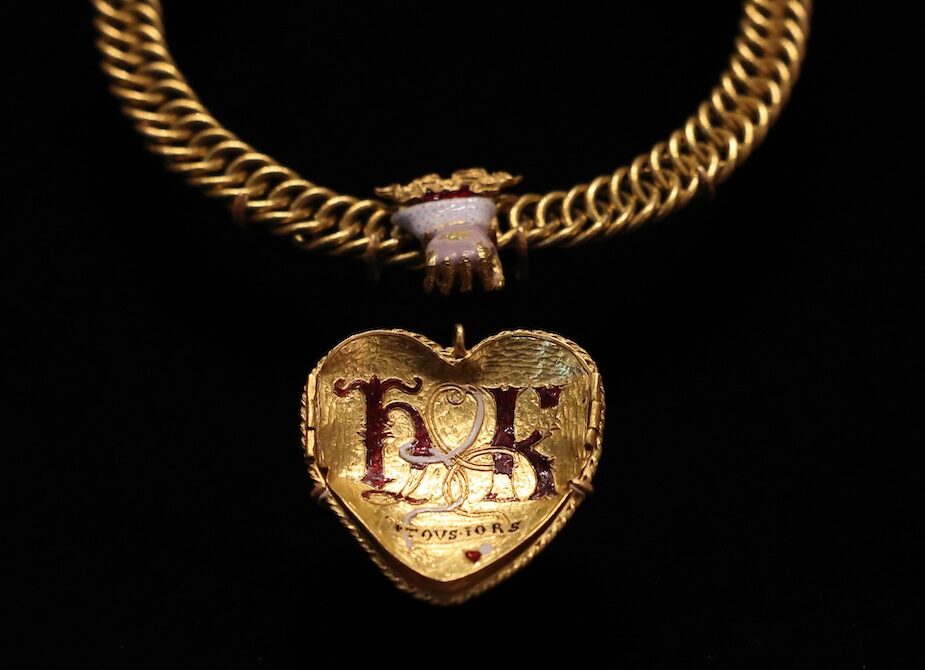
  • A unique survival – The pendant is believed to be the only one of its kind known to survive from the Tudor court. It features a heart-shaped locket of enamelled 24-carat gold suspended from a 75-link gold chain, attached via a clasp shaped like a hand emerging from a cloud.
  • Historically rich symbolism – The front is decorated with the Tudor rose (symbol of England) entwined with a pomegranate bush, the emblem of Katherine of Aragon, representing fertility and her Spanish heritage. On the reverse, the locket reveals the initials ‘H’ and ‘K’ united by a tasselled cord, and both sides carry the French motto tousiours (‘always’).
  • Possible royal occasion – Experts at the British Museum suggest the pendant may date to around 1518 and could have been created to commemorate the betrothal of the couple’s daughter Princess Mary to the French heir-apparent, a lavish Tudor-court spectacle blending dynastic ambition and pageantry.
  • Cultural and historical rarity – Few personal jewellery items from the Tudor court have survived meaning that much of what we know is through portraits and inventories. The Tudor Heart offers a rare material link to the realities of the early Tudor court, making it a potentially once-in-a-generation discovery.

What the Tudor Heart Means for High-Value Jewellery Collectors

Provenance & Authentication

For collectors with the means to acquire or invest in museum-grade jewellery, provenance is now more important than ever. A piece like the Tudor Heart – with clear historical context, documented discovery, expert research, and public interest – offers a level of credibility and heritage that few modern pieces can match. This provenance not only adds emotional and historical value but also helps in validating the piece for insurance, resale and legacy purposes.

Rarity & Uniqueness

The rarity of authentic jewellery linked to royal or historically significant persons dramatically increases its desirability. As we see with the Tudor Heart, items that connect to major historical figures or events — especially when few comparable objects survive — command special status. For high-net-worth collectors, such pieces effectively become heritage assets, not mere ornaments.

Market Value & Insurance Considerations

Pieces of this nature tend to appreciate in value, not just because of intrinsic material (gold, enamel) but because of their story, rarity, and collectability. However, these same characteristics also pose challenges: high volatility in market value, potential difficulty in resale, and a premium on proper conservation, security, and documentation.

Standard jewellery insurance is often insufficient. Collectors of high-end fashion, art and jewellery increasingly seek policies with features like agreed-value settlements, worldwide cover, and protection for provenance/documentation loss.

Why Specialist Insurance & Risk Management Matter

While the appeal of owning an object like the Tudor Heart is clear, so are the risks – theft, loss, damage, forgery, provenance disputes, fluctuating market demand, and logistical issues when transporting or lending pieces.

For high-net-worth individuals investing in heritage jewellery or antiques, specialist insurance via a broker experienced in ‘private client’ cover like James Hallam is often essential. Such insurance can provide:

  • Agreed-value cover to ensure the payout reflects current market or insured value rather than purchase price.
  • Worldwide cover is vital if items travel, are loaned, or exhibited.
  • Restoration/replacement flexibility is essential for rare or irreplaceable items where a simple cash settlement may be inadequate.

Without specialist cover, even a piece as historically priceless as the Tudor Heart would face disproportionate risk, especially given that standard insurance policies rarely contemplate the unique value and considerations of heritage pieces.

A Guide for Collectors Thinking of Museum-Grade Jewellery & Antiques

If you’re considering investing in royal or heritage jewellery it is worth bearing in mind:

  1. Demand rigorous provenance and authentication – Insist on full documentation of history, discovery/ownership chain, lab verification (where appropriate), and expert appraisal.
  2. Treat the piece as both heritage asset and collectible – Its value lies not only in materials but in historical significance, rarity, and provenance.
  3. Consider long-term stewardship and legacy – Think how the piece will be maintained, stored, inherited, or potentially loaned for display.
  4. Choose specialist, high-net-worth insurance cover – Ensure policies reflect the true value, importance, and unique nature of the object.
  5. Recognise that owning such a piece is a responsibility, not just ownershipAs the campaign around the Tudor Heart show,  once a piece of high historical value appears, there is public and institutional interest.

 Visit the The British Museum to find out more about The Tudor Heart Appeal.

 Get in touch for help and advice

If you are thinking of investing in a piece of jewellery or have any concerns or queries on your insurance cover please don’t hesitate to speak to us.

You can call any of the team on 0203 002 9859 or email pcl@jameshallam.co.uk

smart home

Smart Home Vulnerabilities: Why UK High-Net-Worth Households Need Cyber Security Insurance

Smart Home Vulnerabilities: Why UK High-Net-Worth Households Need Cyber Security Insurance 1000 497 James Hallam

With UK luxury homes increasingly dependent on smart technology, cyber threats are now a significant risk for high-net-worth households. This guide explains smart-home vulnerabilities, the rise of cybercrime targeting affluent families, and why specialist cyber security insurance is essential.

Luxury living in the UK increasingly means sophisticated smart-home systems, digital convenience, and interconnected technology. With this transformation comes a new type of exposure, cyber risk.

Where once criminals targeted physical access points such as windows and doors, today many attacks occur digitally through home networks, connected devices, and unsecured smart systems. For high-net-worth households, the financial and reputational stakes are significantly higher.

This guide explores the growing cyber threat landscape, why wealthy UK households are now prime targets, and how specialist cyber insurance protects against these evolving risks.

Smart Homes: Convenience with Hidden Vulnerabilities

UK luxury homes now incorporate a range of connected technologies:

  • Smart locks
  • Multi-room audio systems
  • Digital assistants
  • CCTV and security systems
  • Heating and lighting automation
  • Wi-Fi-enabled appliances
  • Children’s smart devices

Every connected device increases convenience but also creates an entry point for hackers.

When these systems sit on a single home network, a breach in one device can compromise all others, including personal data, private emails, and financial information.

Why High-Net-Worth UK Households Are Attractive Targets

Cybercriminals target affluent individuals for several key reasons:

  1. Greater financial capacity – Hackers view HNW households as more likely to pay ransoms or fall victim to financial fraud.
  2. Rich digital footprints – Affluent individuals often store sensitive personal, business, and financial data.
  3. Valuable digital assets – From investment accounts to cryptocurrency wallets, digital assets hold real monetary value.
  4. Sophisticated home systems – Smart security devices, if compromised, can be used to monitor, track, or access a property.

Common Cyber Threats Affecting UK Homes

High-net-worth households increasingly face:

  • Ransomware attacks on personal devices and home networks
  • Smart-home takeovers affecting cameras, lighting, gates, and alarm systems
  • Email interception and invoice fraud
  • Identity theft
  • Financial scams and phishing attacks
  • Unauthorised access to digital assets

These attacks are often automated and indiscriminate but the consequences for affluent families can be severe.

Why Standard Home Insurance Is Not Enough

UK home insurance policies typically do not include robust cyber cover. Where cyber protection is included, it is often limited and not designed for the needs of HNW households.

Specialist personal cyber insurance offers far broader and more meaningful protection.

What Specialist Cyber Insurance Covers

High-net-worth personal cyber insurance often includes:

  • Cybercrime & financial loss – Reimbursement for fraudulent transfers or cyber-enabled theft.
  • Ransomware & extortion management – Expert assistance and negotiation support.
  • Smart-home restoration – Including system reconfiguration and device replacement.
  • Identity theft assistance – Legal support and credit monitoring.
  • Data recovery – For family photos, documents, and digital media.
  • Reputational support – Public relations assistance if private information is leaked.
  • Family-wide protection – Cover extends to partners, children, and live-in staff.

For more tips on physical home security – read our article here.

Strengthen Your Home’s Cyber Protection

If your home relies on smart technology, or if you hold valuable digital assets, robust cyber insurance is essential. Please note that this protection cannot be arranged as a standalone product and is only offered within our high-net-worth household insurance portfolio.

If you have any concerns or queries on your insurance cover including cyber insurance, please don’t hesitate to speak to us. You can call any of the team on 0203 002 9859 or email pcl@jameshallam.co.uk.

row of records

Protecting Your Vinyl Collection: A Specialist Insurance Guide for UK Record Collectors

Protecting Your Vinyl Collection: A Specialist Insurance Guide for UK Record Collectors 1000 667 James Hallam

Vinyl has reclaimed its place at the centre of the UK music world. What was once considered a nostalgic medium has evolved into a thriving collector’s market, where rarity, condition and provenance can turn a £20 record into a four-figure investment. From first pressings and deleted sleeves to limited-edition coloured runs and signed jackets, the value of vinyl is growing at a pace many collectors never anticipated.

For high-value collectors, records often represent far more than musical enjoyment. They are cultural artefacts, passion projects, and financial assets rolled into one. As more collections grow in both size and value, so does the need to consider whether they are properly protected.

However, many UK collectors still rely on standard home insurance policies, often without realising that their records may not be covered at all. This guide explores why that gap exists, how to protect rare and valuable vinyl effectively, and how specialist insurance ensures your collection remains safe for years to come.

The Growing Value of Vinyl in the UK

Vinyl has experienced a remarkable resurgence over the past decade. Limited-run pressings often sell out within minutes, and collectors are increasingly willing to pay premium prices for rare or high-grade records. Early pressings from iconic artists, misprints, unusual label variations and imported editions regularly appear at auction, sometimes achieving unexpectedly high results.

A record’s condition has a significant influence on its value. Mint or near-mint copies, particularly those still in shrink-wrap or with original inserts, can be worth many times more than well-played versions. This rarity drives demand and strengthens the argument for protecting collections as you would any other appreciating asset.

With collectors now routinely spending thousands of pounds annually on rare records, it’s clear that vinyl has shifted from a nostalgic interest to a meaningful investment category.

Why Standard Home Insurance Is Often Insufficient

Many collectors assume that their vinyl library is simply another household possession. Unfortunately, this is rarely the case. Home insurance policies often include low value caps for individual items, along with broader exclusions that can leave vinyl collectors exposed.

Common issues include:

  1. Insufficient single-item limits: Single-item limits may sit far below the value of a rare record. A high-value first pressing worth £2,000, for example, might only be insured for £500 under a standard policy.
  2. Low total cover limits: Even if individual records are insured, the overall collection limit may be too low.
  3. Exclusions for collectibles: Some policies exclude items considered ‘for display or collection purposes.’
  4. Limited cover for accidental damage: many collectors are surprised to learn that accidental damage is not automatically included. A warped record, a torn sleeve or water damage from a leaking pipe may fall outside standard cover.
  5. Inadequate protection during transit: Standard cover often excludes damage occurring during transport.
  6. No cover for appreciation in value: Values can rise quickly, particularly after an artist’s passing or when a rare variant gains recognition.

For committed collectors, these gaps can be costly.

How Specialist Vinyl Collection Insurance Provides Proper Protection

Specialist insurance is different because it recognises the unique nature of vinyl collecting. Rather than treating the collection as a generic category, it provides cover tailored to the specific risks and values associated with records.

One of the biggest advantages is the ability to agree the value of your collection upfront. This creates certainty. If something is lost, damaged or stolen, you know what will be paid out. This is especially important for rare editions where market values can fluctuate.

A specialist policy can also protect against wider risks that standard home insurance may overlook. Transit cover, accidental damage, and protection during storage or loaning are often included as standard. For collectors who regularly transport records to fairs, restorers or storage units, this expanded protection is incredibly valuable.

Documenting and Valuing Your Collection

To secure the right level of cover, it’s helpful to build a clear record of what you own. A well-maintained inventory is invaluable, not only for insurance but also for future valuations, sales, or estate planning.

A good inventory typically includes details such as:

  • the artist
  • album title
  • pressing information
  • catalogue numbers
  • the condition of both vinyl and sleeve

Photographs add another level of clarity, and many collectors also keep written valuations for exceptionally rare items. Digital catalogue platforms such as Discogs can be useful tools for tracking purchases and identifying pressings.

For larger or more valuable collections, regular professional valuations are worth considering. The vinyl market moves quickly, and a valuation that was accurate three years ago may be significantly out of date today. Reviewing your insurance every year ensures your cover keeps pace with the market.

Preserving the Condition of Your Vinyl

Insurance provides financial protection, but preserving the condition of your collection helps maintain its value and reduces the likelihood of a claim. Good storage practices make an enormous difference to the longevity of vinyl.

  • Environmental control

Vinyl is sensitive to heat and humidity, and even a few hours of high temperatures can cause irreversible warping. Keeping your collection in a cool, stable environment away from direct sunlight is essential. Records should always be stored upright, not stacked, and heavy shelves or solid furniture can help support larger collections.

  • Protective sleeves

High-quality inner sleeves prevent static, dust and scratches, while thick outer sleeves protect artwork from wear and tear. A record-cleaning routine not only improves sound quality but also reduces long-term damage.

  • Secure packaging

For collectors who frequently move house, visit record fairs or loan items, careful handling and secure packaging are vital. Accidental damage in transit is far more common than many collectors realise- an issue that specialist insurance can address if properly arranged.

Why Working with a Specialist Broker Matters

Every vinyl collection is different. Some collectors focus on a single genre, some build extensive libraries across decades, and others concentrate on ultra-rare or investment-grade records. The right insurance must reflect this individuality. A specialist broker ensures that your policy is tailored precisely to the size, scope and value of your collection.

For high-value collectors, this personalised approach offers both clarity and peace of mind.

With James Hallam you can protect your vinyl collection as part of your high-net-worth household insurance portfolio

Get in touch for help and advice

If you have any concerns or queries on your insurance cover please don’t hesitate to speak to us.

You can call any of the team on 0203 002 9859 or email pcl@jameshallam.co.uk

Does High Value Home Insurance Cover Christmas Gifts?

Does High Value Home Insurance Cover Christmas Gifts? 1000 667 James Hallam

Buying Christmas presents and gifts for other occasions, such as birthdays, weddings and anniversaries, means that you may temporarily store certain high value items, bought for friends and loved ones, in your home. If these items are lost or damaged, will your current high value home insurance cover you, or will you have to take out additional cover for valuable Christmas gifts?

Are Christmas Presents Covered Under High Value Home Insurance?

Your high value home insurance policy will cover you for Christmas presents. But the specific level of cover you get will depend on your policy wording, and on the value of the gifts themselves.

Standard Home Insurance: However, if you have a standard home insurance policy, rather than high net worth insurance, you should check your policy wording for a “New Possessions” section, as gifts for other people are not always covered as standard.

High Value Home Insurance: When taking out your high value home insurance, the policy wording will specify a level of cover based on the combined value of the contents in your home. This takes into account your home’s general contents, along with any high value items such as jewellery, antiques, art, and other collections.

Bringing Christmas presents and other gifts into your home may raise the total value of your home’s contents beyond your agreed cover limit. But does this mean that your policy will not cover you for any lost, stolen, or damaged Christmas gifts?

Some Insurers Will Cover Christmas Gifts as Standard

Some insurers will provide additional cover for Christmas gifts, even if their combined value exceeds your policy’s existing cover limit.

At James Hallam, our High Value Home Insurance policies include the following forms of cover:

  • Extended cover around special and religious events: This means that you will automatically be covered for any high value items you bring into your house not just for Christmas, but for other special occasions, including birthdays, weddings, and other religious events, such as Ramadan, Diwali and Hannukah.
  • Extended cover for newly acquired items: We understand that new acquisitions may push the value of your home’s contents beyond your cover limits, which is why we automatically extend cover for newly acquired items. This can include Christmas gifts.

How Long Do I Have to Inform my Insurer of a Gift?

When it comes to new acquisition cover, usually you would have to update your policy after a certain grace period has elapsed in order to get full cover for any new items you bring into your home. But as Christmas gifts will only be in your home for a temporary period, then you probably will not have to update your policy to get the cover you need unless you receive a high value gift yourself. New items and gifts will usually be restricted to 90 days, after which you should formally notify your insurer to have your cover increased.

For more information, please check your policy wording.

If You Need To Make a Claim For Lost, Stolen, or Damaged Christmas Gifts

If your Christmas gifts are lost, stolen, or damaged, then your insurers will want to know exactly what you have lost, along with the exact value of each item.

This is why it is a good idea to keep an inventory of any Christmas gifts you bring into your home. You should also retain any receipts or invoices for each item, so that you can demonstrate each item’s value.

Not All Insurers Offer Cover For Christmas Gifts As Standard

Also bear in mind that, if you are not insured with James Hallam, then your insurer may not offer the same extended cover for special occasions or new acquisitions as we do.

If your insurer does not cover Christmas gifts as standards, then you may have to take out temporary extended cover for the Christmas period. Your insurer will probably need an inventory of all of the additional high value items you bring into your home, along with the specific value of each item.

Get The Cover You Need This Christmas From James Hallam

James Hallam is an independent Lloyd’s broker with a dedicated team of experienced insurance professionals who care about protecting your property.

Our High Value Home Insurance policies will cover your Christmas gifts as standard, so you can have total peace of mind that you will be covered should anything go wrong over Christmas, and beyond.

Find out how we can help you today.

Keeping Shepherd’s Huts Warm in Winter: Insulation and Heating Options

Keeping Shepherd’s Huts Warm in Winter: Insulation and Heating Options 1000 750 James Hallam

With the right design, heating, and insulation, a shepherd’s hut can remain warm and toasty even through the coldest winter months.

In this post we will outline the best and most efficient ways to keep your shepherd’s hut warm in winter.

Insulating Your Sheperd’s Hut For Winter

If you invest in proper insulation for your shepherd’s hut, you can attain a steady and comfortable indoor temperature all year round. This means that, as well as keeping your hut warm in winter, good insulation can also keep your hut cool in the summer.

Insulation works through trapping warm air inside the hut. Without insulation, it will take much longer to heat your hut to a comfortable temperature, as a lot of the warm air will leak to the outside. Also, without adequate insulation, the hut will get cold again pretty quickly the moment you turn the heating off.

Ways to Insulate Your Shepherd’s Hut

You have a number of options for insulating your shepherd’s hut:

  • Foam – Rigid foam boards may offer the highest thermal resistance of any insulation. But this may cost more than other options.
  • Fibreglass – This may be the most affordable insulation choice, as well as the easiest to install.
  • Sheep’s wool – The most eco-friendly insulation option. Sheep’s wool is breathable, meaning it will retain moisture as well as heat. This can help prevent dampness in your hut, which can greatly improve your hut’s thermal performance.

Eliminating Heat Loss – Floor, Walls, and Roof

When it comes to insulation, most people will target the hut’s walls. This makes sense, as the walls have the greatest surface area, and thus may contribute the most to heat loss. But remember that heat rises, which is why it is equally important to insulate the hut’s roof.

Multi-layer insulation can help prevent heat from escaping through the hut’s roof. For a greener option that can also add a touch of character, you could consider applying a layer of sustainable turf to your hut’s roof.

Heat can also escape through the hut’s floor. A layer of underfloor insulation can help prevent this. But insulated mats, or even thick rugs or carpets, can also help.

Draught-Proofing Your Shepherd’s Hut

Your hut’s windows and doors will also contribute to heat loss. Insulated doors and double-glazed windows can make a huge difference.

If your hut is a new build, it may already have double-glazed windows fitted. But if it is an older model, it may still have single-glazed windows. These can let in drafts while allowing heat to escape, which can make it much harder to heat your hut and to keep it warm. Replacing single-glazed panes with double-glazed will make a noticeable difference.

How to Heat Your Shepherd’s Hut in Winter

You have a range of options for heating your shepherd’s hut:

  • Stoves – Many will choose the rustic charm of a traditional wood-burning stove. But for a more versatile option, choose a multi-fuel stove. This will give you the ability to burn a number of different fuels, which can help you manage your hut’s running costs.
  • Electric heaters – An electric heater can quickly warm your hut at the touch of a button. These are only really an option if the hut is connected to the grid, though. Plus, they can use up a lot of power, which means you might be looking at relatively high running costs compared to a stove.
  • Underfloor heating – This might be more difficult and expensive to install than other heating options. But an underfloor heating system is unobtrusive, which could help you make the most of the limited space inside your hut.

The combination of a heating system and good insulation will help keep your hut warm even on the coldest days of the year.

Whichever heating system you choose, make sure it is properly installed, with adequate ventilation where necessary. It is also important to keep on top of maintenance.

It’s also important to be aware that a number of insurance exclusions and conditions apply to the use of open fires and barbeques, and leaving a shepherd’s hut empty over the winter months.*

The Cosy Touch For A Cosy Shepherd’s Hut Experience

Finally, there are a few finishing touches that will make your hut feel extra cosy in the winter.

A heated towel rack can provide its own source of heat, while also giving you somewhere to warm your socks and other items of clothing, so that they feel extra toasty when you put them on.

If you rent your shepherd’s hut to guests, you could provide blankets, sachets of hot chocolate, and even jumpers and slippers.

Get The Insurance You Need For Your Shepherd’s Hut

James Hallam is an independent Lloyd’s broker with a dedicated team of experienced insurance professionals who specialise in getting you the cover you need at a competitive price.

We will ensure you get full cover for your shepherd’s hut, whether you use it yourself, or you let it out to holidaymakers.

Learn more about our specialist shepherd’s hut insurance and get a free quote today.

*Insurance Exclusions and Conditions

Open Fires and Barbeques 

We will not pay any loss or damage as a result of you using a barbeque, wood or log burner, or any other form of open fire within 3 feet of the shepherd’s hut. You must ensure that all sources of ignition are removed from the shepherd’s hut whilst unattended.


Draining Down – Water 

From 1 November to 31March (both dates inclusive), when the shepherds hut has been unattended for more than 7 consecutive days, we will not pay for loss or damage unless the water has been turned off at the stopcock within the shepherd’s hut and the water system drained down.


Shepherds’ Huts Fire Protection 

  • We will not pay for any loss or damage to your building unless:
  • Wood / log burners are installed by a HETAS approved person.
  • Chimneys and flues are kept clean and well maintained as per the manufacturer’s instructions.
  • Chimneys are to be swept at least twice per year by an approved person.
  • A fireguard is always used to protect against flying sparks and hot embers.
  • Logs are stored at least 6 feet away from the wood burner.
  • Wood burner is extinguished and left to cool for a period of 30 minutes prior to the building becoming unattended.
  • All clothing, fabric and other flammable items are always kept at least 3 feet away.
  • All shepherds huts have a fire extinguisher and fire blanket installed.


Beach Hut Winter Maintenance Checklist

Beach Hut Winter Maintenance Checklist 1000 667 James Hallam

We recently published a guide to beach hut summer maintenance, which discussed how you can get your beach hut ready for the high season. In this post we will explore beach hut winter maintenance, with a checklist of tasks that will help you safely “close down” your hut for the winter months.

Why You Need to Winterise Your Hut

Taking care of any repairs or renovations now will make it less likely that you will have to make some more serious repairs in future. In winter, you could face:

  • High winds, heavy rains, low temperatures – unless you take the time to prepare, winter weather could cause some serious damage to your hut.
  • Risk of crime and theft – Remove any high value items that thieves may target while the area is less busy is an important part of winterising your hut.
  • Becoming a target of vandalism – Vandals may be more likely to target huts that look run-down and weatherbeaten.

Beach Hut Winter Maintenance Checklist

  1. Cleaning and Decluttering

You have heard of a spring clean? Well, now it is time for an autumn clean:

  • Remove all valuables, belongings, and perishables from your hut.
  • Give every surface a thorough clean. This will help prevent the build-up of mould and mildew over the winter, while also making next year’s spring clean a little easier.
  • Remember to secure any outdoor valuables too, such as furniture or BBQs.
  1. Repairing and Renovating

Prioritise small repairs now as it will help you avoid big repairs later:

  • Thoroughly inspect your hut for any potential issues
  • Look for leaks
  • Find and fix any loose fittings
  • Identify any signs of wear, tear, and rot
  • Oil hinges and other metal elements to help prevent rust
  1. Weatherproofing

Batten down the hatches! Look for ways to protect your hut from the harsh winter weather. This might involve:

  • Insulating the walls and ceiling, sealing any gaps in the windows and doors
  • Buying some shutters to protect any glass from sand and other debris.
  • Apply a fresh coat of weatherproof paint to the hut’s exterior, to protect it from the corrosive effects of sea salt.
  1. Security

Finally, think about ways you can keep your hut safe from criminals over the winter.

  • As we mentioned above, keeping your hut in pristine condition in itself could help deter vandals
  • Get extra locks for the exterior to make life harder for thieves
  • Remove any valuables to ensure that they will not find anything worth stealing even if they do break in
  1. Check Your Insurance

Your insurer may specify how you should care for your beach hut as a requirement of their specialist beach hut insurance policies. This might include taking certain measures to keep your hut safe from the elements, and from criminals, while it is unoccupied over the winter. It’s always recommended to:

  • Check your policy wording to make sure you are doing everything your insurer expects of you. If you do not, you may not be able to make a claim for damages should anything happen to your hut.
  • You could also use the end of the season as an opportunity to review your beach hut insurance. Are you getting all the cover you need, at a best price?

James Hallam is an independent Lloyd’s broker with a dedicated team of experienced insurance professionals who are committed to protecting your beach hut at a competitive price.

We provide a specialist beach hut insurance scheme and are experts in this market. We will endeavour to get full cover for your beach hut, no matter its size or location, and no matter how you use it, using our specialist beach hut scheme.

Learn more about our specialist beach hut insurance and get a free quote today.

Old antique books

Rare Books & Collectables: A Market for 2025 and Beyond

Rare Books & Collectables: A Market for 2025 and Beyond 1000 664 James Hallam

In a world ruled by screens, something surprising is happening: rare books are booming. As e-readers and digital platforms dominate, collectors are turning toward tangible, timeless works of literature and history. This revival isn’t just nostalgia, it is a recognition of the enduring power of physical books as both cultural artefacts and investment assets.

The digital paradox

The more we live in a digital age, the more we crave permanence. Digital files are fleeting, subject to updates, deletions, or obsolescence. A first edition of The Great Gatsby, by contrast, is both enduring and irreplaceable. The feel of the paper, the scent of old leather, the sight of a dust jacket that has survived a century. These are experiences technology cannot replicate.

Collectors know this, and the numbers prove it. The global rare book market is now estimated at $2 billion, and is projected to increase to $2.8 billion by 2033.

What is driving the market

Certain categories are leading the charge:

  • Modern First Editions: J.K. Rowling’s Harry Potter and the Philosopher’s Stone (1997), originally sold for £10.99, now commands upwards of £45,000. Recently an incredibly rare first edition of Tolkien’s The Hobbit sold at auction for £43,000.
  • Classic Literature: Early editions of Fitzgerald, Hemingway, Joyce, and Woolf are among the most reliable ‘blue-chip’ investments in the sector.
  • Manuscripts and Letters: Collectors are increasingly drawn to unique, personal artefacts – Austen’s correspondence, Wilde’s prison letters, Churchill’s wartime notes.
  • Emerging Collectables: Works by contemporary authors like Margaret Atwood, Salman Rushdie, and even collectible graphic novels such as Maus and Sandman are creating new categories of demand.

Beyond financial appreciation, rare books offer display value and cultural status. A carefully curated shelf can be as much a statement piece as fine art.

The responsibilities of collecting

As with silver, collecting rare books requires care and expertise. Authentication is critical -first editions can hinge on tiny details like misprints or publisher identifiers. Condition is equally important. A dust jacket can account for as much as 80% of a 20th-century book’s value, making preservation vital.

Books must be stored in controlled environments with stable temperature and humidity. Protection against light, pests, and pollutants is essential, as is professional conservation when restoration is needed.

Serious collectors must think about risk management. Specialised insurance policies, professional appraisals, and secure storage facilities are integral to protecting collections that can easily be worth tens of thousands.

Looking to the future

The rare book market is set to evolve in fascinating ways:

  • Demographics: Millennials and Gen Z collectors are increasingly drawn to physical authenticity. They are also broadening the scope of what is valued, placing greater emphasis on diverse voices, women authors, and global literature.
  • Technology: Far from replacing rare books, digital tools are enhancing the market. Online auction platforms, bibliographic databases, and even AI-powered analysis are making it easier to verify, trade, and value collections.
  • Institutions and Investors: Universities, museums, and private foundations are aggressively pursuing acquisitions, while wealthy individuals are increasingly treating books as part of a diversified investment portfolio.

Why collectors keep coming back

Rare books are more than financial assets. They are physical connections to history, creativity, and human thought. Whether it is a medieval manuscript, a Shakespeare folio, or a first edition of To Kill a Mockingbird, these objects embody our cultural heritage.

For investors, they also represent diversification. An asset class largely uncorrelated with traditional markets. But for collectors, the real return is something deeper: the joy of holding history in your hands.

At James Hallam, we understand that rare books are more than possessions. They are legacies. Our specialised insurance solutions protect these treasures ensuring that whether you own a single beloved volume or a comprehensive collection, your books will endure for generations to come.

Get in touch for help and advice

If you have any concerns or queries on your insurance cover please don’t hesitate to speak to us.
You can call any of the team on 0203 002 9859 or email pcl@jameshallam.co.uk

Scotch whiskey bottle

Whisky as an Investment – Collecting the Water of Life

Whisky as an Investment – Collecting the Water of Life 1000 663 James Hallam

For centuries, whisky has been celebrated as a drink to savour, a glass shared with friends, a marker of special occasions. But in recent years, it has become something more: an investment class in its own right. Rare bottles and vintage casks now sell for six-figure sums, and investors are increasingly treating whisky as seriously as fine art, classic cars, or Bordeaux wine.

From dram to asset

The shift didn’t happen overnight. In the 1960s and 70s, wealthy individuals began quietly purchasing casks for private enjoyment. By the 1990s, collectors were turning their attention to bottles from distilleries that had long since closed, like Brora or Port Ellen. When Japanese whiskies such as Hanyu and Yamazaki burst onto the scene in the early 2000s, the market began to take global shape.

Fast forward to today, and whisky has fully crossed into investment territory. Dedicated auction houses run specialist sales, investment funds now offer whisky portfolios, and global indices track the market’s performance. In the past decade alone, whisky prices have grown at rates of 15–20% annually, putting the market’s global value at around £10 billion.

What drives value

Like any alternative asset, whisky’s value depends on scarcity, quality, and story. Some of the most important drivers are:

  • Closed distilleries. Bottles from Port Ellen or Brora, long since shuttered, command extraordinary premiums.
  • Age and maturity. The longer the whisky rests in cask, the rarer and more valuable it becomes.
  • Critical acclaim. Glowing reviews from respected publications can elevate bottles into collector territory.
  • Packaging and provenance. Original boxes, intact labels, and certificates make a tangible difference to value.

Global tastes, global markets

One of the most fascinating aspects of whisky investment is how preferences vary across the world:

  • Scotland. Macallan continues to set records, while Islay’s peated whiskies inspire cult-like devotion.
  • Japan. Yamazaki and Hanyu dominate headlines, with boutique producers like Chichibu becoming instant collector favourites.
  • Emerging regions. From American bourbon to Irish single pot stills, and newer entrants in Taiwan, India and Australia, global expansion is fuelling new opportunities.

How whisky performs

The numbers speak volumes. The Rare Whisky Icon Index has risen nearly 500% since 2008, outperforming the FTSE 100, fine wine, and even classic cars. Japanese whisky has been the standout, showing almost 600% growth over the same period. Importantly, whisky’s correlation with traditional assets is low, making it a powerful tool for diversification.

Of course, performance has not been without bumps. During the 2008 financial crisis and again in the early months of the COVID-19 pandemic, prices dipped. But both times the market recovered swiftly, reinforcing whisky’s reputation for resilience.

More than a drink

What makes whisky unique as an investment is that it combines craftsmanship, heritage, and culture in a way few assets can. Each bottle tells a story of a place, a distillery, sometimes even a single cask and collectors aren’t just buying liquid in a glass, but a piece of history.

The water of life has always carried meaning. Today, it carries financial weight too. For those willing to look beyond traditional assets, whisky may prove not just a pleasure to drink, but a portfolio’s secret ingredient.

Get in touch for help and advice

If you have any concerns or queries on your insurance cover please don’t hesitate to speak to us.
You can call any of the team on 0203 002 9859 or email pcl@jameshallam.co.uk

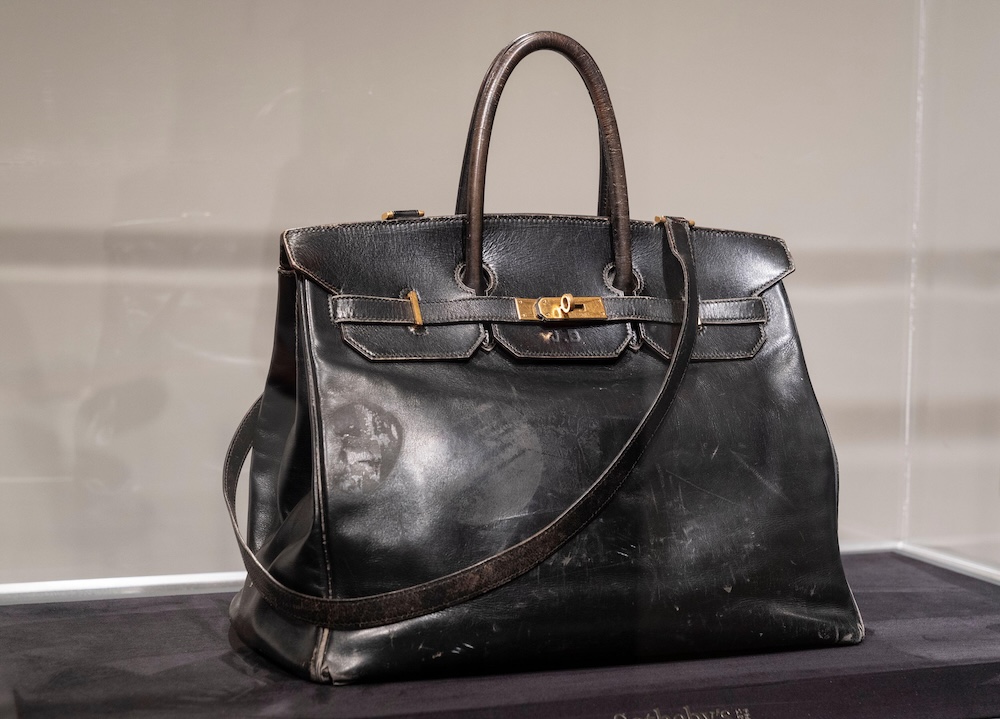
Original Hermes Birkin Bag, 2025 Credit: Lev Radin/Alamy News Live

Birkin No.1 – The Birth of a Cultural Icon

Birkin No.1 – The Birth of a Cultural Icon 1000 719 James Hallam

When Sotheby’s sold Jane Birkin’s own Hermès Birkin bag in 2025, it wasn’t just another high-profile auction. It was history. The original Birkin bag achieved a record-breaking £1.8 million. For collectors, it was the ultimate symbol of fashion crossing the line from accessory to blue-chip asset.

A bag born from chance

The Birkin’s origin story is one of those rare fashion legends that feels almost too good to be true. In 1983, Jane Birkin found herself on a flight from Paris to London, seated next to Jean-Louis Dumas, then CEO of Hermès. Frustrated with her handbag’s lack of practicality, she confessed her wish for something more functional yet elegant. Dumas listened. Within a year, the Birkin was born.

That first version was a 35cm bag, crafted in natural leather with palladium hardware, its spacious interior making it as useful as it was beautiful. Jane carried it everywhere — to film premieres, markets, even on casual errands. Over time it developed the patina and wear that only comes from a life truly lived, making it even more fascinating to collectors.

From utility to investment

What started as a practical handbag evolved into the most coveted accessory in the world. Hermès played a key role in shaping its mystique. By limiting production, training only select artisans, and allowing only a handful of clients access each year, the Birkin became synonymous with exclusivity. Waiting lists stretched for years.

Celebrity culture amplified the allure. Victoria Beckham famously built a collection of over 100 Birkins, while Kim Kardashian’s posts showcasing rare versions reached millions. The bag became a fixture in popular culture, appearing on red carpets and even scripted into “Sex and the City.”

But beyond the glamour, the numbers speak for themselves. Studies have shown Birkins appreciating at an average annual rate of more than 12% – outperforming gold, stocks, and fine art at times. Rare models, especially those in exotic leathers or unusual colours, have sold for hundreds of thousands of pounds.

What drives value

Not every Birkin is destined for seven figures. Professional valuers look at a mix of factors:

  • Size – the smaller 25cm models often command the highest premiums.
  • Leather – cocodile, ostrich, and alligator add significant multiples to value.
  • Colour – neutrals like black and tan are highly liquid, while rare shades such as Rose Tyrien carry hefty premiums.
  • Condition – a store-fresh Birkin can fetch double one with heavy wear.

The no.1 sale – a market milestone

When Jane Birkin’s own bag came to auction, it was always going to draw attention. Provenance matters in luxury, and this was the genesis piece of an entire collecting category. Estimated at £800,000 – £1.2 million, it soared to £1.8 million after a tense 12-minute bidding war with international buyers on the line.

For the market, the sale did more than set a record. It validated what collectors and investors already knew: the Birkin is not just a handbag, it is an asset class.

Looking ahead

The Birkin market continues to evolve, shaped by:

  • New generations of collectors, particularly Millennials and Gen Z, who view Birkins as investments first.
  • Digital innovation, from blockchain certificates to AI-driven valuation platforms.
  • Global demand, with Asia and the Middle East emerging as particularly influential markets.

Jane Birkin’s £1.8 million sale proved the handbag’s dual role as cultural icon and financial instrument. For discerning collectors, the real question now isn’t whether a Birkin is worth investing in – it’s how it fits into the portfolio of the future.

Get in touch for help and advice

If you have any concerns or queries on your insurance cover please don’t hesitate to speak to us.
You can call any of the team on 0203 002 9859 or email pcl@jameshallam.co.uk

Dedicated Claims Advocacy That Makes the Difference

Dedicated Claims Advocacy That Makes the Difference 1000 667 James Hallam

When life takes an unexpected turn, the true test of your insurance is not in the policy – it is in the claims service that stands behind it. At James Hallam Private Clients, claims handling is not outsourced or left as an afterthought. Our in-house team is built into the very heart of what we do, making up around 10% of our workforce. That is a scale and level of specialism that sets us apart from brokers without a dedicated claims function.

A specialist claims function built around you

  • Not an add-on: Our claims team is a core part of our model, not an optional extra.
  • Deep insurer relationships: Decades of collective experience and direct contacts with senior underwriters mean we can escalate matters quickly.
  • True partnership with brokers: Your Private Client Executive can focus on placing and protecting your cover, knowing we will stand shoulder to shoulder with you when things go wrong.

Working hand in hand with our brokers

Our claims team does not just manage paperwork – we partner directly with our Private Client brokers to secure the best outcomes.

Take a recent high-value loss (anonymised here). The claim was complicated by a late notification, which could easily have prejudiced the insurer’s position. Our claims team maintained regular contact with the client, ‘fighting their corner’. We managed to increase the settlement offer on one significant item and continue to press on another. Crucially, we worked with the placing broker – who leveraged their underwriter relationships – to push for a better overall settlement. That seamless collaboration is only possible when your broker has a dedicated, specialist claims team working side-by-side.

The breadth of claims we manage

From a collapsed drain claim settled at just £172 to major storm-related water ingress exceeding £125,000, through to fires, jewellery thefts, and liability incidents, the Private Clients claims team at James Hallam is trusted to manage a uniquely varied portfolio. Each case, large or small, gets the same meticulous attention.

Why a dedicated claims function matters

Many brokers stop at placing cover and simply pass claims back to the insurer. At James Hallam, we know that is where clients need us most. Our dedicated Private Client Claims Team offers a true in-house advocacy service, making the difference between a frustrating process and a positive resolution.

Here is how that plays out in practice:

  • Faster turnaround: we do not sit back and wait for updates. Our handlers pick up the phone to loss adjusters and underwriters, pushing for action when claims risk stalling.
  • Clear communication – insurance jargon can feel impenetrable. We break down exclusions, limits, and technical wording into plain English.
  • Evidence collation & preparation- clients often do not know what level of detail insurers require. We step in to gather valuations, photos, invoices and timelines, formatting them into professional evidence packs and where possible fielding questions and requests without having to trouble the client. In a six-figure jewellery theft, this preparation meant the loss adjuster could validate the claim quickly, avoiding weeks of back-and-forth.
  • Shielding clients in liability claims – when third parties are involved, clients can feel vulnerable. Our team guides in the appropriate responses and communications to third parties, liaising with solicitors, and protecting our clients from direct confrontation.
  • Uninsured loss recovery – if a loss which is not your fault falls within your excess, we can help you in preparing and presenting a claim to the responsible party.
  • Leveraging broker-insurer relationships – that is how we have increased settlement offers, persuaded insurers to accept client-preferred suppliers, and turned ‘no’ into ‘yes’.
  • Personal advocacy, every step – we are relentless advocates, ensuring our clients feel supported and never alone during the claims process.

Meet the team behind the advocacy

The team combines technical expertise with empathy and persistence, ensuring clients feel supported at every stage.

Savannah Armitage, Team Leader (Ipswich): Chartered Insurance Institute and BDMA qualified, Savannah is the principal handler for Private Client claims. With extensive experience across liability, property and motor, she has managed major losses involving high-value property, artwork, jewellery and international assets.



Jenna Warman (London): Based close to our London Private Client team, Jenna brings extensive property loss expertise and London Market experience, with a strong advocacy background in negotiating with insurers and loss adjusters.



Amelia Collings (Ipswich): The first of our in-house Claims Academy, she is progressing along the CILA route. Despite her early career stage, she has already delivered fantastic results for clients, including securing significantly enhanced settlements.


Real success stories – how we add value

We see a huge range of claims – from lost jewellery items to major fire and storm damage losses, through to complex liability disputes.

  • High-value jewellery theft: A client’s collection worth six figures was stolen in a targeted burglary. By coordinating valuations, pushing for recognition of sentimental value and ensuring their chosen jeweller was accepted by insurers, we secured a settlement of over £109,000 paid directly to their preferred supplier.
  • Bracelet loss: An insurer initially proposed £8,000 based on valuation. We fought for market comparable, obtained a specialist quote, and secured a cash settlement of £18,900 – more than double the starting offer.
  • International property fire: When a dehumidifier caused fire and smoke damage abroad, we worked across markets and jurisdictions to keep the claim moving. We coordinated with overseas adjusters, chased building insurers, and pushed through delays until a £46,000+ settlement was agreed.
  • Third-party liability: A gate collapsed onto a passing vehicle, exposing our client to a potential liability claim. We immediately stepped in to shield the client from direct correspondence, took control of communications with the injured party’s representatives, and ensured liability was properly investigated and defended.

That is the James Hallam difference – dedicated claims specialists, embedded within Private Clients, ensuring our brokers can focus on what they do best while our clients receive the very best in claims advocacy.