Marine

winter storage of boats

Top 10 Tips for the Out-of-Water Season: An Off-Season To Do List

Top 10 Tips for the Out-of-Water Season: An Off-Season To Do List 650 433 James Hallam

The end of the boating season often signals a shift in priorities for marine enthusiasts. As your vessel is hauled out of the water, it’s essential to ensure it is properly cared for during the off-season.

Whether you are protecting against the winter chill or gearing up for spring’s return, these top 10 tips will keep your boat in prime condition and ready for the next adventure.

1. Winterising your boat

Winterisation is the cornerstone of off-season boat care, particularly in colder climates where frost and freezing can wreak havoc on engines and plumbing.
• Drain water from engines and plumbing systems to prevent ice damage.
• Add antifreeze to critical systems, such as engine cooling circuits and bilge pumps.
• Spray protective coatings on metal components to guard against rust and corrosion.

Failing to winterise properly can result in costly repairs, so take the time to do it right or consult a professional.

2. Thorough cleaning internally and externally

Before your boat goes into storage, a deep clean is a must. Accumulated salt, algae, and barnacles can degrade your vessel’s surfaces over time.

• Scrub the hull to remove marine growth.
• Rinse and clean all deck fittings, rails, and exterior surfaces with fresh water.
• Don’t neglect the interior—wipe down surfaces, vacuum upholstery, and empty any perishables.

A well-cleaned boat not only looks better but is also easier to maintain in the long term.

3. Hull & propeller inspection

The off-season is an ideal time to assess the condition of your hull and propeller.
• Look for cracks, blisters, or signs of osmosis, and sand or repaint if needed.
• Inspect the propeller for nicks, dents, or corrosion, as these can affect performance.

Timely repairs now can prevent major issues during the boating season, saving you both time and money.

4. Engine maintenance

Your engine is the heart of your boat, and proper care ensures it runs smoothly when it’s time to set sail again.
• Change the engine oil and replace filters.
• Inspect belts, hoses, and seals for wear or cracking.
• Lubricate moving parts to reduce friction and corrosion.

Keeping up with regular maintenance extends the engine’s lifespan and minimises unexpected breakdowns.

5. Battery and electrical care

Electrical systems require special attention during the off-season to prevent issues when you are ready to relaunch.
• Remove or disconnect batteries and store them in a cool, dry place.
• Clean battery terminals and check charge levels periodically.
• Inspect wiring for wear or damage and address any issues immediately.

Proper storage and care ensure your batteries remain in top condition.

6. Damp and mould prevention

Boats are prone to damp and mould, especially in storage. Taking proactive steps can save you from unpleasant surprises.
• Use desiccants, dehumidifiers, or moisture absorbers in the cabin and storage compartments.
• Open lockers and doors to promote airflow.
• Ensure all upholstery, carpets, and fabrics are dry before storage.

This not only keeps your boat fresh but also protects against long-term damage.

7. Safety equipment check

The off-season is the perfect time to review and update your safety gear.
• Inspect life jackets for wear and tear and ensure they are in compliance with regulations.
• Check the expiry dates on fire extinguishers and replace them as necessary.
• Replenish your first-aid kit, ensuring all supplies are current and complete.

Preparing safety equipment in advance gives you peace of mind when it is time to head back on the water.

8. Off-season storage options

Choosing the right storage option for your boat is critical to its protection during the off-season.
• Dry stack storage keeps boats safe from the elements but may require prior booking.
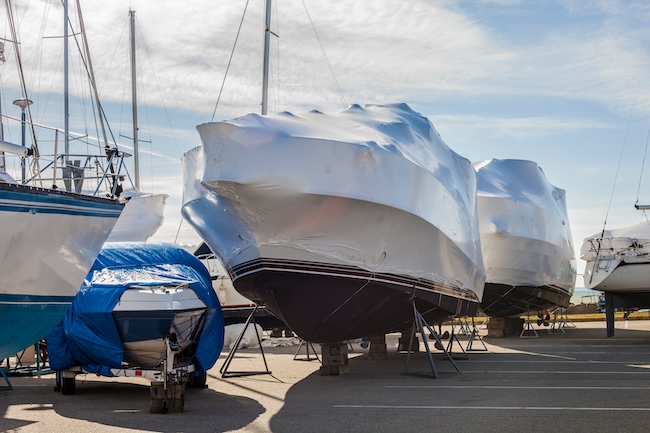
• Shrink-wrapping provides weatherproofing and is excellent for outdoor storage.
• Trailer storage is a versatile and cost-effective choice for smaller vessels.

Consider your budget, location, and security needs when making your decision.

9. Environmental best practices

Caring for your boat responsibly means caring for the environment, too.
• Use biodegradable cleaning products to reduce chemical runoff.
• Dispose of used oil, antifreeze, and fuel properly at designated facilities.
• Avoid washing your boat near waterways to prevent pollutants from entering the marine ecosystem.

Sustainable practices not only preserve our waterways but also enhance the reputation of the marine trade as stewards of the environment.

10. Plan for next season early

The off-season provides a valuable opportunity to get ahead of next year’s boating plans.
• Book berths early to secure your preferred locations.
• Schedule maintenance and upgrades well in advance to avoid the pre-season rush.
• Consider enhancements like new electronics, navigation systems, or improved storage solutions.

With proper planning, you will transition seamlessly from off-season to open water.

Make the most of the out-of-water season

The out-of-water season is more than a hiatus. It is an opportunity to protect, maintain, and improve your vessel. By following these ten tips, you ensure your boat is not only well-preserved but also primed for another successful season.

Remember, the marine trade thrives on proactive care and foresight. By taking the time now to prepare, you set yourself up for smoother sailing in the future. Whether you are a seasoned sailor or a weekend cruiser, your efforts during the off-season will pay dividends when the waters beckon once more. Use this time to also ensure that your insurance is up to date and sufficient.
What is the Difference Between CIF and FOB in Shipping?

What is the Difference Between CIF and FOB in Shipping? 800 449 James Hallam

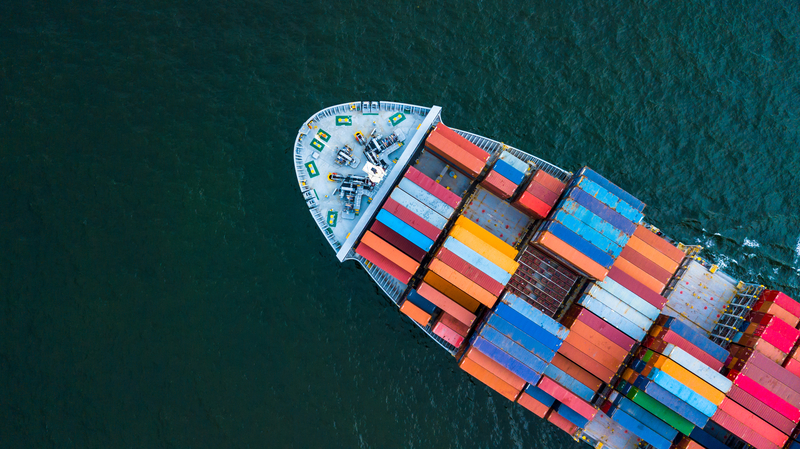
CIF and FOB are two different international shipping agreements determining who is responsible for goods during transit – the buyer, or the seller.

In this post we will outline the differences between CIF and FOB, and examine the insurance implications of each.

What is CIF in Shipping?

CIF stands for cost, insurance, and freight. In this arrangement, the seller takes on the following responsibilities:

  • Loading the goods onto the ship.
  • Covering the cost of shipping.
  • Arranging adequate marine insurance to cover the goods during shipping.
  • Acquiring all necessary documents, licenses, and inspections.

The buyer takes full responsibility for the goods from the moment they reach the destination port. This includes liability for any extra costs that may be incurred during the voyage, such as customs fees.

What is FOB in Shipping?

FOB stands for free on board. In this arrangement, the seller has very few responsibilities. Essentially, they are responsible for transporting the goods to the port, and for ensuring they are loaded onto the ship.

The buyer assumes full responsibility for the goods once the voyage begins. This means they are responsible for arranging transportation, for paying any additional shipping fees, for arranging adequate marine insurance for the goods in transit, and for unloading the goods at the destination port.

What is the Difference Between CIF and FOB in Shipping?

The key difference between CIF and FOB is who takes responsibility for the goods during shipping – the buyer, or the seller.

Under CIF, the seller is responsible for all the costs and risks of shipping, with the buyer only taking responsibility upon delivery.

Under FOB, the buyer takes responsibility for all costs and risks from the moment the goods are loaded onto the ship.

CIF or FOB – Which is Best?

Neither arrangement is necessarily “better” than the other. The arrangement you choose will depend on the nature of the trade agreement.

Pros and Cons of CIF for Buyers

PROS: The seller takes full control for all shipping arrangements, and other responsibilities. This invariably makes things more convenient for the buyer. But it can also make things more cost-effective for both parties – particularly if the seller has more experience with local customs

CONS: CIF can prove a lot more expensive than FOB. Plus, it can lead to communication issues, as the buyer may have to contact the seller should they ever need an update on progress etc.

Pros and Cons of CIF for Sellers

PROS: CIF allows sellers to use their chosen providers, which can help save money. They can also choose to include insurance and other related costs in the shipping prices they charge the buyer, which can make CIF the most cost-effective, and even profitable, choice for sellers.

CONS: Sellers take full responsibility for the goods until they reach their destination. If anything happens to the ship or the goods during the voyage, they could be liable for all damages or losses.

Pros and Cons of FOB for Buyers

PROS: In an FOB arrangement, the buyer can choose their own providers for many aspects of the shipment, from logistics to insurance. This can help them find the best prices, while giving them more control over delivery timeframes etc.

CONS: The extra responsibility can result in added pressure – more things to manage means more things that could potentially go wrong. As such, smaller or less experienced buyers may struggle with the process.

Pros and Cons of FOB for Sellers

PROS: FOB allows sellers to complete their sales much sooner. Once they have ensured that the goods are loaded, the seller has nothing else to worry about. From this point on, the shipment becomes the buyer’s responsibility.

CONS: Because they have less control over logistics, insurance, and other expenses, FOB arrangements can often result in lower profit margins for sellers.

Get Comprehensive Marine Insurance From James Hallam

Everard Insurance Brokers are the specialist marine trading division of James Hallam Limited who are accredited Lloyd’s brokers.

Whether you are looking to cover a single vessel or an entire marine trade supply chain, we deal with a wide range of niche insurance providers, and we can arrange the cover you need at the best possible price.

Find out more about our specialist marine insurance services.

What Are The Fundamental Principles of Marine Insurance?

What Are The Fundamental Principles of Marine Insurance? 800 533 James Hallam

In this post we will explain six fundamental principles of marine insurance. The principles of marine insurance may determine the outcome should you ever need to make a claim on your policy.

What are the fundamental principles of marine insurance?

  • Utmost Good Faith
  • Insurable Interest
  • Indemnity
  • Proximate Cause
  • Contribution
  • Subrogation

Principle of utmost good faith

Sometimes referred to by the Latin phrase Uberrimae Fidei, the principle of utmost good faith is basically an agreement that all parties in a marine insurance agreement will be totally honest with each other.

This means that neither the insurer nor the policyholder will falsify or misrepresent any aspect of the agreement. The insurer, for instance, will not mis-sell the policyholder any cover they do not need. Meanwhile, the policyholder will be completely transparent when taking out the policy and will not, for example, misrepresent the age of their ship.

Should either party violate the principle of utmost good faith, it can void the insurance agreement.

Principle of insurable interest

This means that a person can only insure objects in which they have a financial stake. If they would not suffer any financial losses as a result of loss or damage to the object, then they cannot buy insurance for it.

This principle forms the basis of all insurance policies, and it is largely a means of preventing situations where policyholders might actually profit from allowing, or intentionally causing, a loss.

Principle of indemnity

The principle of indemnity means that the settlement the policyholder receives will never exceed the total value of the loss they incurred.

This principle is in place to prevent policyholders from using their marine insurance policies to make a profit, such as through allowing or intentionally causing a loss.

Principle of proximate cause

The principle of proximate cause is designed to simplify the claims process through determining exactly how an instance of loss or damage occurred.

For example: An incident at sea may result in loss or damage to a policyholder’s cargo. Upon investigation, the insurers find that the loss could be attributed to two or more events. In this case, the insurers will aim to determine the proximate cause – the closest or most plausible cause that resulted in the damage.

A marine insurance policy wording will specify the events that are covered, and those that are not covered. The principle of proximate cause allows insurers to ensure that they only provide settlements for insured events, while preventing policyholders from making claims for instances for which they were not insured.

Principle of contribution

The principle of contribution allows policyholders to insure the same object for the same risks with two different insurance companies.

Shipping contracts can get very complex, very quickly. Marine businesses may need multiple policies to cover different jurisdictions, for example. Allowing for overlap between multiple policies allows the policyholder to get full cover for their ship or cargo, from beginning to end.

If the policyholder needs to make a claim on these overlapping policies, the two insurers may work together to split the liabilities.

Principle of subrogation

If the policyholder makes a claim on their policy following an insured incident, the insurer will pay them the settlement to which they are entitled. However, following this, the principle of subrogation allows the insurer to assume future ownership of the cargo.

The insurer may try to salvage and sell the cargo themselves, in order to recuperate the cost of the settlement. But if the policyholder attempts to sell their cargo after making a claim for loss or damage, they may be obliged to donate any money they make to their insurer.

This is a further principle that is designed to prevent policyholders from profiting from their insurance arrangements. Without this principle, unscrupulous policyholders would be able to intentionally damage their goods in order to receive two separate paydays – one for the ultimate sale of the goods, and one from their insurance settlement.

Why it is important to understand marine insurance principles

Understanding these key principles of marine insurance is vital if you want to know exactly what to expect should you ever make a claim on your policy.

These various principles will determine your responsibilities in the claim process, along with your insurer’s responsibilities. They could also determine the settlement you receive, and the ultimate fate of any cargo that might be lost or damaged during an incident.

Have any questions about marine insurance?

If you have any questions about marine insurance, or you want to ensure you have all the insurance you need for your ship or cargo, we are here to help.

Everard Insurance Brokers are the specialist marine trading division of James Hallam Limited who are accredited Lloyd’s brokers.

Find out more about our specialist marine insurance services.

Types of Marine Losses – A Quick Guide

Types of Marine Losses – A Quick Guide 800 533 James Hallam

We recently published a guide to the different types of marine insurance. We explored various different insurance products, and what they cover. In this post we will provide an overview of the different types of losses in marine insurance, to help you further understand the role marine insurance can play in protecting your business.

Different Types of Marine Loss

In this post, we’ll cover the following types of marine losses:

  • Actual total loss
  • Constructive total loss
  • Particular average loss
  • General average loss

Actual Total Loss

Actual total loss (ATL) is a situation where a ship, or its cargo, has been completely lost or destroyed. Or, the ship or cargo has been so severely damaged that repairs or salvage is no longer economically feasible.

How do ATL Claims Work? ATL claims are usually quite straightforward. If you experience total loss of your ship or cargo, you make a claim on your policy, and your insurer will then take ownership of your ship’s wreckage, or your lost, damaged, or stolen cargo. You will then be entitled to a settlement that is equal to the ship’s or the cargo’s full value, as specified in your policy wording.

Constructive Total Loss

Constructive total loss (CTL) is a situation where a ship, or a cargo, is significantly damaged to the point that the cost of repair or recovery would exceed the insured item’s value.

Typically, a marine insurance policy will specify a percentage of insured value that will trigger a CTL situation, usually around 75%. So, if the cost of repairs or recovery exceeds this percentage, it would automatically trigger a CTL situation.

How do CTL Claims Work? CTL claims are generally more complicated than ATL claims. When you make a claim for a CTL situation, you have the option to let your insurer take ownership of your insured property. Your insurer may then sell this property as salvage and use the proceeds to offset your settlement. If you prefer, you can retain ownership of your insured property, but you may receive a smaller settlement as a result.

Read our full guide to constructive total loss in marine insurance.

Particular Average Loss

Particular average loss is a type of partial loss. It is cover for when some, but not all, of your cargo is damaged or lost as a result of an incident. The term refers to losses as a result of a specific cause (hence, “particular”).

How do Particular Average Loss Claims Work? In a particular average loss claim, only the owner of the damage property is entitled to compensation. The amount of compensation received is based on the extent of damage or loss suffered as a proportion of its full value.

General Average Loss

General average is a principal in marine insurance outlining that all stakeholders proportionately share any losses resulting from incidents at sea. Specifically, the general average principal applies to situations where crew members voluntarily sacrifice part of a ship’s cargo in order to save the whole. For example, through deliberately throwing cargo overboard to prevent a ship from sinking, or intentionally taking on some water to extinguish a fire.

What’s the Difference between General Average Loss and Particular Average Loss?

A key difference between particular average loss and general average loss is that, in a particular average loss situation, only one policyholder will receive compensation. On the other hand, in a general average loss situation, the compensation will be distributed equally among numerous stakeholders.

Read our full guide to general average in marine insurance.

Get Comprehensive Marine Insurance From James Hallam

Everard Insurance Brokers are the specialist marine trading division of James Hallam Limited who are accredited Lloyd’s brokers.

As we deal with a wide range of niche insurance providers, we can arrange the cover you need, whether you are looking to cover a single vessel or an entire marine trade supply chain.

Find out more about our specialist marine insurance services.

What is Constructive Total Loss in Marine Insurance?

What is Constructive Total Loss in Marine Insurance? 800 533 James Hallam

Marine insurance policies cover businesses for various different kinds of losses. In this post we will explain what constructive total loss is, and how it differs from other types of loss.

What is Constructive Total Loss?

In the marine industry, insurers will consider constructive total loss (CTL) following significant damage to ships or cargo. Specifically, they will consider CTL when the cost of repair would be greater than the ship or cargo’s insured value.

Most marine insurance policies will specify a percentage of insured value that will trigger a CTL situation. This is usually around 75% of the insured value of the ship or cargo. If the cost of repairs or recovery exceeds this percentage, it can automatically trigger a CTL situation.

In a CTL situation, the insurer may offer a settlement that is equal to the cargo’s value, having subtracted certain charges. If the ship or cargo owner does not want to accept this settlement, they may instead retain the damaged cargo along with a lower settlement.

When Will Marine Insurers Consider Constructive Total Loss?

Marine insurers will only consider CTL if the circumstances leading to the loss meet certain criteria, including:

  • The ship carrying the cargo is stranded or grounded. If it cannot take to sea again, or if the cost of doing so would be prohibitively expensive, the insurer may consider a CTL settlement.
  • A natural disaster, such as a hurricane or a cyclone, damages the cargo beyond repair.
  • A man-made disaster, such as a collision with another ship due to human error, leads to significant damages that would cost more to repair than the amount insured.

What is Actual Total Loss in Marine Insurance?

CTL applies to situations where cargo is significantly damaged, but it remains, in theory, repairable or recoverable. Another type of loss – actual total loss (ATL) – applies to situations where the cargo is so severely damaged that repair or recovery is simply not possible.

Examples of ATL situations include natural or man-made disasters that result in irreparable damages, such as fires, flood, hurricanes, explosions, or collisions. If the ship is hijacked, or the cargo is stolen, it may also constitute an ATL situation, as it may become impossible to recover the cargo.

In an ATL situation, the policyholder is entitled to receive a settlement that is equal to the ship’s or the cargo’s full value.

What’s the Difference Between Constructive Total Loss and Actual Total Loss in Marine Insurance?

If you experience significant losses as part of your marine business, depending on the specific circumstances of your case, your insurer can either declare it as a CTL or an ATL. Broadly speaking, they will declare it a CTL if the cost of repairs or recovery is prohibitively high, and an ATL when repairs or recovery is essentially impossible.

For example, if a ship is stranded, and it would cost too much to recover it, the insurer will declare it as a CTL situation. But if the ship sinks, or if it is damaged in such a way that it is no longer seaworthy, the insurer will declare it to be an ATL situation.

Another key difference between the two situations is who takes ownership of the wreckage. In an ATL situation, the insurer will take ownership of any wreckage or insured cargo. Yet in a CTL situation, the policyholder has the option of retaining ownership in exchange for a reduced settlement.

Claiming For Loss on Your Marine Insurance Policy

Claiming for ATL is relatively straightforward. You need to file a claim with your marine insurance company, who will then work to confirm your loss, and pay you the full value of the lost or damaged property as a specified in your policy wording. As part of this, you may need to provide proof of ownership, along with evidence of the property’s value.

Claiming for CTL can be a bit more complicated. Upon making a claim, you have the option to surrender your ownership of the property to your insurer, who can then sell the property as salvage, using the proceeds as part of your settlement. Alternatively, you can choose to retain ownership of the property so as to salvage it yourself, on the understanding that your insurer can deduct this salvage value from your settlement.

If you are facing a CTL situation, be sure to check your policy wording, and to talk to your insurers, before you make a claim, so as to be sure of your rights and responsibilities.

Worried About Losses at Sea? We Are Here to Help

If you are worried about your rights and responsibilities following significant losses, then we are here to help. Everard Insurance Brokers are the specialist marine trading division of James Hallam Limited who are accredited Lloyd’s brokers. We have a dedicated team of experienced insurance professionals who are committed to protecting your marine business and have a deep understanding of every aspect of the maritime industry, and the various insurance implications.

Find out more about our specialist marine insurance services.

cargo

Institute Cargo Clauses A, B and C Differences

Institute Cargo Clauses A, B and C Differences 700 469 James Hallam

There are three different types of institute cargo clauses in marine insurance: A, B, and C.

This post will explain what each clause entails, before exploring some of the key differences between them, to help you decide what sort of cover is right for you.

What Are Institute Cargo Clauses?

In a marine insurance policy, institute cargo clauses specify what is covered, and what is not covered, if a shipment is damaged or lost.

How Do Cargo Clauses Differ?

The different institute cargo clauses essentially outline just how much cover the policy provides. Clause A policies offer the most comprehensive cover, while Clause C policies are a lot more restrictive.

What Are The Different Institute Cargo Clauses?

In short:

  • Clause A – The most extensive cover. This policy will provide cover for almost all potential risks, and any exclusions will be made clear in the policy wording. Clause A policies come with the highest premiums among the three clauses.
  • Clause B – Intermediate cover for a moderate premium.
  • Clause C – Highly restricted cover for the lowest premiums among the three clauses.

Institute Cargo Clause A

This is the broadest possible cover for your shipment. A Clause A policy may also be referred to as an “all risks” policy, as it will cover your cargo, its container, and your vessel for the majority of the risks you may face at sea. Any exclusions to the cover will be clearly outlined in the policy.

As it is the most comprehensive form of marine insurance, Clause A policies will invariably cost a lot more than Clause B and Clause C policies.

Institute Cargo Clause B

A Clause B policy is a lot more restricted than a Clause A policy. Rather than covering your entire cargo for “all risks”, a Clause B policy provides “named perils” cover. That is, cover for a specific set of risks, which might include loss or damage as a result of fire, explosion, collision, water damage, and so on.

Institute Cargo Clause C

A Clause C policy provides the most limited cover, yet this results in lower premiums. Usually, while Clause A and Clause B policies might cover a broad range of risks, Clause C policies will only cover situations that occur during carriage. This might include loss or damage caused by fires, explosions, collisions, sinkings, and so on.

What Cargo Clause is Right For Me?

It all depends on the nature of the cargo you are shipping, and the shipping route you use.

If you are shipping cargo on a safe shipping route, and the cargo has a relatively low value while carrying no inherent risks (such as risk of fire, explosion, or degradation), then even the basic coverage of a Clause C policy might be sufficient.

Yet if you feel you are likely to face risks that are not covered by a Clause C policy, you will need to instead choose a Clause B or Clause A policy. Clause A will provide the highest possible level of cover, but this will come at a price. If a Clause A policy provides cover that feel surplus to your requirements, then you may be able to get by with the intermediate level of protection provided by a Clause B policy.

Get Comprehensive Maritime Insurance Cover From James Hallam

If you cannot decide what sort of marine insurance policy is right for you, then we are here to help. Everard Insurance Brokers are the specialist marine trading division of James Hallam Limited who are accredited Lloyd’s brokers. We have a dedicated team of experienced insurance professionals who are committed to protecting your business and we have a deep understanding of every aspect of the maritime industry, and the various insurance implications.

We specialise in offering tailored marine insurance cover. Talk to us about your requirements, and we will help you decide whether you need a Clause A, Clause B, or Clause C policy.

Find out more about our specialist marine insurance services.

What is General Average in Marine Insurance?

What is General Average in Marine Insurance? 800 532 James Hallam

General Average is one of the oldest of all maritime laws, with roots dating as far back as 1000 BC.

In this post we will briefly explain what General Average means in maritime law and explore the Maritime Insurance implications.

What is the General Average Principal?

The General Average principal mandates that all stakeholders proportionately share any losses resulting from situations where crew members voluntarily jettison part of the ship or cargo to save the whole.

Where Does the General Average Principal Come From?

General Average law can trace its roots back to the island of Rhodes. The Rhodian law, established in approximately 1000 BC, outlines certain rules for stakeholders following emergencies at sea.

Certain hazards may force crew members to jettison certain items of cargo, or parts of the ship itself. In these scenarios, it is unreasonable to expect crew members to take the time to carefully choose precisely which items of cargo they voluntarily sacrifice.

General Average Laws Today

In the late 19th century, maritime companies still respected the General Average principles of mutual benefit and common security. However, different countries followed different systems for calculating losses, expenses, and contributions. These discrepancies inevitably caused some issues.

The York-Antwerp Rules (YAR) were first established in 1877 with the intention of standardising loss calculations and procedures across the world. YAR has undergone numerous amendments over the years, with the most recent revisions having been made in 2016.

Rule A of YAR states that:

“There is a general average act when, and only when, any extraordinary sacrifice or expenditure is intentionally and reasonably made or incurred for the common safety for the purpose of preserving from peril the property involved in a common maritime adventure.”

How Does the General Average Affect Maritime Insurance?

Maritime Insurance policies will usually include some cover for certain expenses associated with General Average principles:

  • Jettisoned Cargo – Cover for cargo that crewmembers deliberately throw overboard to prevent the ship from sinking or capsizing during storms. Policies may also include cover for retrieving this cargo.
  • Damage to Ship or Cargo – Crewmembers may be forced to take on some water to extinguish a fire. In doing so, they may voluntarily damage some of their cargo so as to save the ship, or the rest of the consignment.
  • Docking Expenses – Ships may need to shelter in a port to allow for severe weather to pass, incurring unexpected extra expenses in the process.
  • Legal Costs – There are often legal costs associated with General Average situations. Stakeholders may disagree on the value of lost cargo, for example, which could lead to a court case. Stakeholders may also have to appoint General Average Adjusters to assess the shared costs and allocate them accordingly.

Why You Need General Average Cover

If you do not have Maritime Insurance and your ship experiences an emergency at sea resulting in a General Average Declaration, then you may struggle to manage the resulting financial obligations:

  • Contribution to the value of the cargo jettisoned or damaged.
  • Expenses associated with retrieving jettisoned cargo, along with the business interruption, lost sales, and storage fees that may result from the salvage operation.
  • Legal expenses that may arise from disagreements over the value of the lost cargo, or the fairness of the shared contributions.

Instances of lost or damaged cargo can be disruptive enough already. If you add the considerable shared financial responsibility that can arise from a General Average Declaration, without adequate cover in place, your maritime business could face a potentially devastating financial loss.

Get Comprehensive Maritime Insurance Cover From James Hallam

Everard Insurance Brokers are the specialist marine trading division of James Hallam Limited who are accredited Lloyd’s brokers. We have a dedicated team of experienced insurance professionals who are committed to protecting your business.

We specialise in offering tailored marine insurance cover. As we deal with a wide range of niche insurance providers, we can arrange the cover you need, whether you are looking to cover a single vessel or an entire marine trade supply chain.

Find out more about our specialist marine insurance services.

ships cargo

Different Types of Marine Insurance: A Guide

Different Types of Marine Insurance: A Guide 560 372 James Hallam

Marine insurance is designed to protect boats, their crews, and their cargo from the many risks associated with sailing. Marine insurance policies can also provide cover for any legal expenses that may arise from incidents.

In this post we will discuss some of the different types of marine insurance. For a full introduction to how marine insurance works, and what it covers, be sure to check our dedicated marine insurance hub.

Types of Marine Insurance Cover

Freight Insurance

This is specialist cover for marine trade businesses to cover any loss or damage to freight cargo in the event of accidents.

Marine trade businesses can also take out Freight Demurrage and Defence (FD&D) insurance to cover any legal costs that are not covered by other insurance policies.

Hull Insurance

This is cover for a ship’s hull, along with any pieces of equipment or furniture. Hull insurance can cover any repairs or replacements that may be necessary following accidents or incidents.

Ship owners may also choose to take out dedicated machinery insurance to cover damage to any essential machinery used on the ship. Or they can choose a combined Hull & Machinery (H&M) policy.

Liability Insurance

If a ship is involved in a collision, liability insurance covers the crew and any other individuals involved for compensation resulting from their injuries.

Marine Cargo Insurance

This covers the ship’s cargo for loss or damage. Marine cargo insurance can also cover for any losses incurred by delays either in sailing, loading, or unloading.

Most marine cargo insurance policies also cover for third parties, in the event of any loss or damage caused by heavy or otherwise dangerous cargo.

P&I Insurance

P&I stands for protection and indemnity insurance. This provides policyholders with cover for claims made by their crew and passengers for illnesses, injury, and death as a result of collisions or other incidents. In the result of a major incident at sea, P&I insurance can also cover for the salvage and removal of the shipwreck.

Types of Marine Insurance Policy

As well as different types of cover, there is also a range of different types of marine insurance policies:

  • Floating Policy – Also known as an open policy, or a blanket policy. It is designed for major exporters. Rather than taking out separate policies for each shipment, they can instead take out a floating policy to cover every shipment they make over an agreed period of time. Periodically, the policyholder will have to declare details of every shipment they made during this period.
  • Voyage Policy – A Marine Insurance policy designed to cover a single shipment or consignment.
  • Time Policy – A Marine Insurance policy that is issued for a fixed period of time, usually a year. The policy will cover all voyages undertaken during this period, with no need to take out separate policies for each voyage.
  • Valued Policy – A policy in which the value of a voyage’s cargo and consignment is specified in the policy wording. This makes it clear how much reimbursement will be due following an incident at sea.
  • Unvalued Policy – The opposite of a valued policy, in which the value of the cargo and consignment is not specified in the policy document.
  • Single Vessel Policy – A Marine Insurance policy that provides cover for a single vessel.
  • Fleet Policy – A Marine Insurance policy that provides cover for multiple ships, usually over a pre-agreed period of time.
  • Port Rick Policy – This provides cover for vessels while they are docked in ports. Usually, marine businesses will take out this policy when they expect their vessel to be anchored at port for an extended period of time. The cover usually stops the moment the ship leaves the port.

Get Comprehensive Maritime Insurance Cover From James Hallam

If you are not sure what type of Marine Insurance cover is right for you, give us a call.

Everard Insurance Brokers are the specialist marine trading division of James Hallam Limited who are accredited Lloyd’s brokers. We have a deep understanding of every aspect of the maritime industry, and the various insurance implications.

We deal with a wide range of niche insurance providers, we can arrange the cover you need, whether you’re looking to cover a single vessel or an entire marine trade supply chain.

Find out more about our specialist marine insurance services

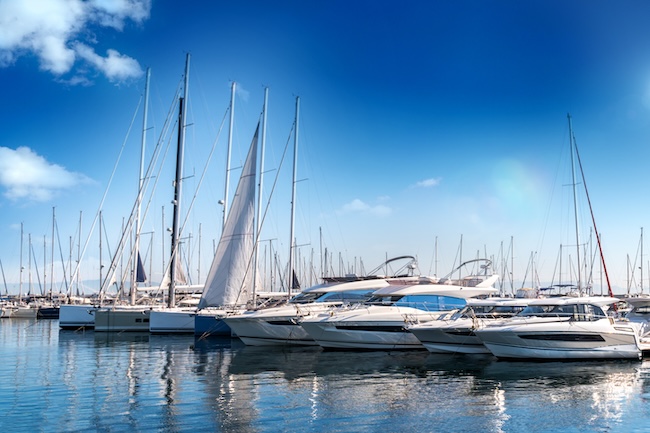
Yacht club and marina

Agreed Value vs Market Value for Boat Insurance

Agreed Value vs Market Value for Boat Insurance 650 433 James Hallam

Ensuring you have the right insurance coverage is crucial. Many marine traders, boat owners and even some insurance brokers may not fully understand the intricacies of their marine insurance policies, particularly when it comes to the marine section.

In this post, we take a look at key components of marine insurance, specifically the basis of cover, helping you to determine whether you are adequately covered or your client has adequate cover under their marine section.

What Types of Marine Cover Is There?

Marine insurance policies typically offer two main types of cover for your boats, vessels, or watercraft: Agreed Value and Market Value. Understanding the differences between these can help you make an informed decision about your coverage.

Agreed Value vs Market Value

Agreed value and market value policies differ on how and when the value of your vessel is made. In brief, agreed value policies set the value of your boat and watercraft at the beginning of your policy, while market value policies set the value of your vessel at the time of the loss.

Next, we look at each type of policy in more detail and the advantages and disadvantages of each.

Agreed Value Cover

Under an Agreed Value policy, the insurer and the insured agree on the value of the vessel at the start of the policy. This agreed value is based on the insured having a financial interest in the amount, supported by evidence provided in the event of a claim.

  • Advantages: In the event of a total loss, you receive the agreed amount, which can provide peace of mind knowing exactly what payout to expect.
  • Disadvantages: These policies can sometimes be more expensive, as the agreed value might be higher than the current market value over time.
    Your financial interest may be lower than the actual market value of your Vessel.

Market Value Cover

Market Value policies, on the other hand, work similarly to property market value. The payout is based on the vessel’s market value at the time of the loss.

  • Advantages: Premiums for market value policies can be lower, as they reflect the depreciating value of the vessel.
  • Disadvantages: If the vessel is undervalued, you may not receive enough to replace or repair it fully, and the principle of average may apply. This means if you are underinsured, any claim payment could be reduced in proportion to the amount of underinsurance. Therefore, the question should be asked at the start of a policy or renewal of the insurance contract, “What is the current value of your vessel, and explain the implications of ‘average’.

The Impact of Inflation and Rising Costs

With inflation driving up the costs of goods, services, and labour, ensuring that your insurance cover keeps pace with these increases is vital. If your policy’s sums insured have not been updated to reflect current values, you might find yourself underinsured. This can have significant financial implications, especially in the event of a total loss or major damage. As inflation has soared over the past few years, has the value of your Vessels changed? Could you replace the Vessel in the event of a total loss for the amount noted on the Policy Schedule.

Making Sure You Have Adequate Insurance Cover

To ensure you are adequately covered, consider the following steps:

  1. Review and Update Regularly: Regularly review your policy and update the sums insured to reflect current market values and replacement costs.
  2. Provide Accurate Information: Ensure all information provided to your insurer is accurate and up-to-date. This includes the value of your vessel and any modifications or additions.
  3. Consult with Experts: Engage with insurance brokers or consultants who specialise in marine trades insurance. Their expertise can help you navigate the complexities of your policy and ensure you have the right cover.
  4. Obtain an Up to Date Valuation
    In the event that you are unsure of the Value of your Vessel(s), it is always a good idea to obtain an up to date valuation from a marine professional.

Having the correct marine insurance cover is your financial safeguard. Whether you choose Agreed Value or Market Value cover, understanding the nuances of your policy can prevent unpleasant surprises in the event of a claim. As costs rise and the market evolves, regular reviews and updates to your insurance cover are essential to maintaining adequate protection.

Get In Touch to Discuss Your Insurance Requirements

If you are unsure about the adequacy of your marine insurance coverage, now is the time to consult with your broker or a specialist. Ensure your policy is up-to-date and reflective of current values to secure peace of mind and financial security for your marine business.

Call us on 020 3148 9540 or email info@everardinsurance.co.uk

Cyber & Data Risks Insurance

Cyber & Data Risks Insurance 1920 1280 James Hallam

Each year when completing a review of their insurances, most businesses will look at uninsured exposures with their insurance broker. Most of these can be reasonably ignored following simple cost-benefit analysis, but cyber is more difficult in that the associated risks and their potential cost to a business are still developing. It is anticipated though that the frequency and severity of such incidents will continue to rise, mirroring the experience of North America where cyber risks are given a higher regulatory and boardroom prominence. In the US it is now estimated that over 75% of corporate businesses purchase cyber insurance.

  • Different businesses will be exposed to cyber risk in different ways; some are reliant on their website to drive turnover, some rely on a hosted accounting or billing system to operate whilst others hold sensitive client data or intellectually valuable data on their systems. There are a multitude of scenarios that leave a business exposed to internal and external electronic threat. The failure of an IT network could be debilitating and a good first step is to identify and take steps to mitigate external and internal IT risks. These include:
    data theft or data loss
  • hijacks where hackers gain control of a system and demand a ransom to restore service
  • bot scams where viruses are used to take over large numbers of computers
  • basic human error (internally generated risks should not be overlooked and continue to be the most common proximate cause to a cyber loss)

Notification costs following the loss of third party data is now a major concern for EU business following GDPR. Safekeeping of data is the responsibility of the customer facing entity, notwithstanding that a third party processing company may have been the party that lost the data and/or contractual terms making a third party responsible for notification. This means if you are hacked and lose your customer data (names, addresses, credit card numbers etc.) you will need to report the loss to the data commissioner, possibly pay PCI fines, pay the cost of notifying your customers that they are at risk, pay for advice to manage their risks and pay PR costs to manage the potential damage to your brand and reputation. All of these risks can be insured and cyber insurance will additionally cover fines and penalties associated with regulatory investigations due to a privacy event.
The other major threat to a business may be the loss of a website and a resultant loss of revenue. Again, this can be insured.

  • The cyber insurance market has been developing at a rapid pace over the past five years as experience has been gained by insurers. Areas of cyber-risk that can now be insured include:
    replacing, restoring or recreating data that has been corrupted or destroyed by network failure or first/third party intervention
  • loss of data and notification management costs
  • criminal threat or extortion to release sensitive information or bring down a network unless demands are met
  • loss of income and extra expenses resulting from when a network is interrupted by attack. Covers criminal hackers, malicious insiders and denial of service (DOS) attacks, (including extortion monies)
  • payment fraud (deception of the insured’s customers into transferring over funds)
  • public relations expenses and crisis management
  • disaster recovery activation costs
  • fines and penalties where insurable by law
  • use of leased / rented external equipment
  • use of third party services
  • additional staff expenditure and overtime payments
  • terrorism risk, including ideological risk (LulzSec, Anonymous etc)

James Hallam Insurance Brokers have been placing cyber risk in the London market for over fifteen years. We source cover to insure against all of the above threats and, in addition, we can protect against risks that the majority of cyber insurers omit. For example, our favoured market will also provide:

  • the provision of first party cover on an “each and every claim” basis, ensuring that policyholders aren’t restricted by a policy aggregate and that the full benefits of cover are available each time a crisis strikes, even if they experience multiple cyber incidents in the same policy period
  • full retroactive cover as standard, meaning that policyholders are covered for breaches they discover during the policy period, even if it first occurred long before. Symantec has reported that the average time to discover a breach is 205 days, making this a particularly important feature
  • an extensive in-house incident response capability to ensure that cyber incidents are dealt with quickly and efficiently in real time. Initial response services are offered with no deductible payable by the insured
  • broader cover for senior executive officers who are regularly targeted in cyber attacks, covering theft of personal funds of individuals as well as those of the company
  • if a suit is brought against directors and officers following a cyber attack, the policy provides affirmative cover in the event that their management liability policy doesn’t respond
  • incident response costs are provided in addition to the policy limit
  • no excess is applied to the initial reporting and investigation costs
  • full systems failure is covered, including resultant business interruption
  • full Supply Chain is covered, including Technology suppliers (and non-Technology suppliers if named)
  • Cryptojacking and Botnetting are included under the definition of Cyber Crime
  • Additional Extra Expense coverage is included for costs above the normal operating expenses of a business
  • Hardware Replacement coverage is included for computer hardware or tangible equipment damaged as a result of a cyber event

Some points to consider when discussing Cyber Risk with your clients

Dealing with a ransomware incident is rarely a simple matter of the ransom payment being made and the business in question automatically regaining access to their systems and data. Even after a ransom payment has been made, and assuming the system can be successfully decrypted, the ransomware can have the unintended side effect of severely impairing the functionality of one or more of a business’s vital systems.

The use of legacy systems can significantly increase the risk of a cyber loss. Generally speaking, legacy systems are not only far more vulnerable to attack, they are also much more susceptible to dysfunction following a cyber attack.

The importance of having data re-creation cover is becoming increasingly apparent. Many cyber policies only provide cover for the cost to recover or restore data from back-ups, but not the costs to re-create or re-enter lost data from scratch. The bulk of the costs to a claim can come from the labour costs associated with manually re-entering data, and brokers should be sure to check that their clients have this important cover in place.

Almost all modern businesses have some form of cyber exposure. Even if a policyholder does not solely rely on their computer systems to carry out work, they will still have an office function that playing a key role in the running of the business. When the computer systems in an office are affected by a cyber event it will almost certainly have a negative impact on the overall business operation and having a cyber insurance policy in place will provide a valuable safety net for the company.

James Hallam can place cyber insurance in the London Market for business domiciled almost anywhere worldwide so please feel free to get in touch if you would like us to assist you and your clients.