

Marine

Fixed Price P&I vs. Mutual P&I Clubs in Marine – What is the Difference?

Fixed Price P&I vs. Mutual P&I Clubs in Marine – What is the Difference? 1000 656 James Hallam

We recently published a guide to the vital role that protection and indemnity (P&I) clubs play in global shipping. P&I clubs help make the often-complex world of marine insurance more accessible and affordable for many operators.

In this post we will explore another insurance product that can help marine businesses of all sizes access the cover they need: Fixed-premium P&I facilities.

What is a Fixed-Premium P&I Facility?

With a fixed-premium P&I facility, shipowners and managers pay a pre-agreed premium that remains fixed for the entire policy year. They will not face any retrospective premium adjustments, and they will not have to make any extra payments on their policy for any reason. Instead, the price they initially agreed to pay will be the price they pay for the whole year.

Insurers can also tailor their fixed-premium P&I policies to meet the operator’s unique requirements. The policyholder can usually specify their cover limits, their deductibles, their specific trading areas, and their crew, passenger, or cargo liabilities.

Who is a Fixed Premium P&I Facility For?

The combination of a fixed price and tailored cover makes fixed-premium P&I facilities an attractive product for many operators. Fixed-premium P&I may be particularly useful for operators running smaller fleets, or those who trade in predictable, lower-risk environments. They can get precisely the level of cover they need at a set price, without having to pay for excessive cover they may never need.

However, fixed-premium P&I certainly is not for everyone. There may be some limits to the cover, making the policies unsuitable for operators who trade in higher-risk environments. For example, not all fixed-premium providers offer Freight, Demurrage, and Defence (FD&D) cover.

Fixed Price P&I vs. Mutual P&I Clubs – What is the Difference?

Mutual P&I Clubs, especially those within the International Groups (IG), operate on a different model. The most obvious difference is that their premiums are not fixed. But there are some key differences beyond this too.

Mutual P&I clubs are structured on a not-for-profit basis. They are owned by their shipowner members. These members elect a board, which oversees the club’s governance. Members also contribute premiums, which are known as “calls”. These premiums are added to a pool from which all members can draw to share the collective cost of claims.

This means that, in volatile years, members may need to pay extra premiums (known as “supplementary calls”) along with additional reserve contributions (known as “release calls”).

The mutual approach gives P&I clubs tremendous financial depth and operational reach. This includes access to the International Group Pooling Agreement, and one of the largest reinsurance programmes in the world.

Why Mutual Clubs Offer Far Higher Limits of Liability

Another big distinction between mutual clubs and fixed-premium facilities is the limit capacity.

Fixed‑premium facilities typically offer liability limits up to $100 million. Depending on the provider and the risk class, the liability limit can go as high as $500 million.

Compared to this, mutual clubs can offer almost unlimited liability protection. This is because their liability is backed by the mutual pool, to which all members contribute, along with some layers of overspill protection. They also have access to commercial reinsurers, if need be.

The Pros and Cons of Fixed-Premium P&I Facilities

As we mentioned above, fixed-premium facilities are ideal for operators running smaller fleets, or those who trade in predictable, lower-risk environments. They can guarantee flexible cover with tailored policies, budget certainty, and there is no mutuality risk. This means you will not be affected by major losses suffered by other members.

But due to the lower liability limits and the cover limitations, fixed-premium facilities are not suitable for all operators. Some operators will actively choose mutual clubs for the voting rights and policy influence. Plus, many charterers and ports require operators to be members of international groups, and will actively rule out operators involved with fixed price facilities.

Plus, mutual P&I insurers are far better suited for vessels with exceptionally high exposure, including:

  • Oil Tankers – Coastal states, charterparty contracts, and major oil companies typically require IG Club membership. This is because only mutual P&I Clubs offer the capacity needed to handle catastrophic environmental claims, as oil liabilities can run into the billions.
  • Cruise Liners – Cruise operators rely almost exclusively on IG clubs, as they offer a greater depth of cover for substantial passenger liability exposure, which can include cover for personal injuries, medical emergencies, mass casualty incidents, and repatriation.

How to Choose Is a Fixed Price P&I or Mutual P&I Club Is Right for You?

The choice often comes down to your priorities as an operator:

Choose Fixed‑Premium If You Want:

  • Cost certainty
  • Fast commercial responses
  • Tailored cover for a lower‑risk or restricted trading area
  • No exposure to mutual supplementary calls

Choose a Mutual P&I Club If You Need:

  • Very high limits of liability
  • Access to IG pooling and reinsurance
  • Compliance with tanker or cruise industry contractual requirements
  • Member‑driven governance and long‑term stability

For many small and medium‑sized operators, fixed premium is a strong and efficient solution.
For high‑risk sectors such as tankers, LNG/LPG carriers, and cruise liners, only mutual IG Clubs offer the required scale of cover.

We Can Help You Get Tailored Marine Insurance That Suits All Of Your Needs

Everard Insurance Brokers has long-standing relationships with both P&I Clubs and fixed-price insurers, ensuring clients receive tailored solutions that meet their operational needs.

Find out how we can help you today.


Types of Piracy at Sea & How to Mitigate Risk

Types of Piracy at Sea & How to Mitigate Risk 1000 577 James Hallam

Piracy is a significant threat for the global shipping industry. In this post we will examine some of the global piracy hotspots, before discussing some of the common types of piracy at sea. We will then explore how you can mitigate the risks of piracy for you, your vessel, your cargo, and your crew.

Highest Risk Piracy Hotspots

  • High risk areas: Gulf of Guinea (West Africa); Indian Ocean (East Africa); Gulf of Aden.
  • Medium risk areas: Strait of Malacca (Southeast Asia); Somalia (Horn of Africa); South China Sea.
  • Low risk areas: Caribbean Sea; Bay of Bengal.

If you trade in any of these areas, even if it is a “low risk” area, then piracy is a very real threat, and you will have to prepare accordingly.

Types of Piracy at Sea

All types of piracy have the same essential goal: To board your vessel for financial gain. Pirates will use a range of techniques to achieve this goal:

  • Surprise Attacks: Pirates may use small and fast skiffs to rapidly approach your vessel, before using ladders or grappling hooks to board. They may choose to attack at night, when it may be harder for the crew to detect their approach and respond to their boarding.
  • Armed Assault: Pirates will be armed with a range of weapons which they will use to intimidate your crew. They may try to take hostages, or they may attempt to steal your cargo directly. Or they may try to hijack your vessel, so that they can take it to a pirate-controlled port.
  • Comms Attack: Pirates may attempt to jam your vessel’s communication systems. This may make it harder for you to detect their approach. It would also leave your vessel isolated, and unable to call for help.
  • Coordinated Attack: Instead of using small and fast skiffs, pirates may instead surround your vessel with a number of larger boats. This will close off some escape routes while allowing them to attack from multiple sides. They may even disguise their pirate boat as a fishing or merchant vessel. This way, they can get close to your ship without raising suspicion, leaving you vulnerable to attack.

How To Mitigate The Risk of Piracy

There are a number of ways you can help reduce the risk of piracy, including:

  • Crew Training: Make sure your crew understands the risks of piracy, and how to identify any red flags that could indicate that an attack is imminent. You must also ensure that your crew knows how to respond to any potential threats, which should include sharing information with other vessels in the area.
  • Onboard Security Personnel: If the local and international laws allow it, some vessels hire extra armed security staff whenever they are sailing through areas where there is a known risk of piracy. While armed security personnel can help your vessel respond to a boarding attempt, they can also act as a strong deterrent. Pirates may be unlikely to attempt a boarding if they know to expect armed resistance.
  • Extra Security Tech: Investing in extra security can help prevent many boarding attempts. This can include razor wire, extra secure doors and windows, water cannons, and safe rooms for the crew. Automated radar systems, infrared cameras, long range acoustic devices (LRADs) and drones can help vessels spot potential threats far in advance, while a ship security alert system (SSAS) can automatically alert any shore-based authorities of growing threats or attacks.

You can read our full guide to preventing piracy at sea.

Does Your Marine Insurance Cover You For Piracy?

If your vessel will be travelling through a location with a risk of piracy, then you must ensure that your maritime insurance covers you for the increased risk. Your policy should include war risk insurance, which can protect against losses from acts of piracy, along with kidnap and ransom insurance (K&R) for you and your crew.

Everard Insurance Brokers is the specialist marine division of accredited Lloyd’s broker James Hallam Limited. We can help you secure comprehensive protection against piracy and related risks, so you and your crew can effectively respond to any incident at sea.

Learn more about our dedicated marine insurance services.


The Dangers of Undeclared Goods in Shipping

The Dangers of Undeclared Goods in Shipping 1000 561 James Hallam

In this post, we will outline the critical risks that improperly identified shipments, or undeclared goods, can post to ships, their crews, and other individuals. We will also discuss how accurate declarations, along with adequate packaging and handling procedures, can contribute to safety at sea.

What Are Undeclared Goods in Shipping?

During transit, some goods pose a certain risk to human health, to property, or to the environment. Specific documentation and handling procedures are vital for managing and mitigating these risks.

But if these goods are shipped without the correct identification, documents, or packaging, then they are considered “undeclared goods”.

Essentially, an undeclared or misdeclared good is any shipment of potentially dangerous goods in which there is no visible indication that the packaging contains hazardous materials.

Examples of Common Undeclared Goods

There are nine main categories of dangerous goods, with specific handling and labelling requirements for each. If any of these are undeclared or misdeclared, they could pose serious risks to your ship or your crew:

  1. Explosives, such as ammunition or fireworks.
  2. This category incorporates both flammable and non-flammable gases, and both toxic and non-toxic gases, along with aerosols.
  3. Flammable liquids, such as paints and fuels.
  4. Flammable solids, including those which are capable of spontaneous combustion.
  5. Oxidising substances and organic peroxides – i.e. substances that could aid combustion in the event of a fire.
  6. Toxic and infectious substances, including medical waste and pesticides.
  7. Radioactive material.
  8. Corrosive substances, such as drain cleaners and other industrial cleaning agents.
  9. Miscellaneous dangerous goods. This category incorporates lithium batteries, which could spontaneously ignite, or even explode, if they are exposed to extreme temperatures, or if they are crushed or damaged during transit.

For more information, take a look at the HSE’s Carriage of Dangerous Goods (CDG) resources.

The Potential Risks of Undeclared Goods

Risk of Harm
If they are not correctly packaged, stored, or handled, these dangerous goods could cause:

  • Fires
  • Explosions
  • Infections
  • Illnesses
  • Other damages to people, property, and the environment.

Regulatory Risks
Undeclared goods also carry a significant regulatory risk. There are severe penalties for shipping undeclared or misdeclared dangerous goods. You could face a significant fine per container, along with even heftier fines, and even prosecution, if any serious injuries or property destruction arises as a result of your actions.

Insurance Risks
There are also insurance implications. If a hazardous substance causes illness, injury, or property damage, you will naturally make a claim on your maritime insurance policy to cover the costs. But if your insurer finds that the hazardous substance was undeclared or misdeclared, then it will invalidate your insurance policy, meaning you may be liable to cover all of your costs yourself.

Managing The Risks of Undeclared Goods

You must ensure that any dangerous goods you ship are correctly documented and labelled, and you must abide by all relevant procedures for handling and storing these goods. Some goods may need to be segregated from others – certain chemical substances are reactive, for example – and you should also outline your response plan in the event of an incident.

Beyond this, it is important that you and your crew learn to identify potentially undeclared goods.

Signs You Might Have Undeclared Goods

Here are some red flags that could indicate that a crate, container, or package might actually contain something hazardous:

  • Vague documentation. All shipping documents should be as accurate as possible. If the documentation says something generic, such as “parts” or “chemicals” or “samples”, then you should act to find out exactly what the shipment contains, and in what quantity.
  • Packaging discrepancies. If the packaging appears rough, or damaged, or otherwise compromised, then it may suggest oversights on the part of the shipper. If they have been this shoddy in packing their goods, then who knows what else they have overlooked?
  • Also look out for discrepancies in the declared contents and the weight, appearance, and labelling of the package. Odd odours may also indicate that the package may contain undeclared hazardous goods.

The Risks of Transporting Bulk Cargo

Certain bulk cargoes may also be at risk of spontaneous combustion or liquefaction, even if the materials themselves are not necessarily classed as dangerous goods.

Coal, iron ore fines, nickel ore, bauxite fines, and other bulk cargoes may pose a serious fire hazard if they are not correctly stored or managed while in transit. Documentation is important here too: Among other things, the moisture content of the bulk cargo must be certified prior to shipping, so as to ensure the correct precautions can be taken to prevent spontaneous combustion during a voyage.

What To Do If You Find Undeclared Goods In A Shipment

If you suspect there may be undeclared or misdeclared goods in a shipment, then you should refrain from taking things any further. Instead, contact the relevant authorities in your current location, who will advise you on your next steps.

You might be worrying about tight shipping deadlines, along with the added costs that delays could incur. But as we have seen, shipping undeclared goods could expose your ship, your crew, and the environment to some serious risks. You may also face some punishing fines, and you could even compromise your marine insurance.

Get The Specialist Marine Insurance You Need From James Hallam

Everard Insurance Broker is the specialist marine division of accredited Lloyd’s broker James Hallam Limited. We can help you secure comprehensive cover for shipping all kinds of dangerous goods, and we can advise you on best practice techniques for identifying and responding to potentially undeclared or misdeclared goods.

Learn more about our dedicated marine insurance services.


Hybrid and Electric Boats: Considerations and Risks For Marinas

Hybrid and Electric Boats: Considerations and Risks For Marinas 1000 667 James Hallam

Hybrid and electric boats are becoming increasingly popular on UK waterways, with an annual increase of almost 7%.

In this post we will outline some key considerations and risks concerning hybrid and electric boats for marinas.

The Different Types of Hybrid and Electric Boats

Fully Electric Vessels
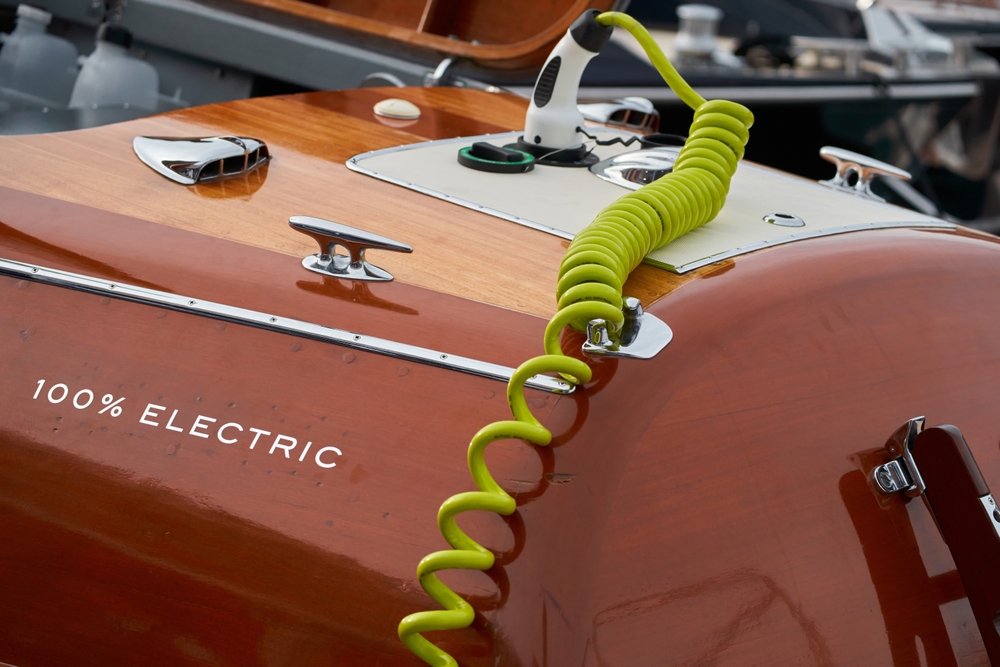
Fully electric vessels are entirely powered by onboard batteries. Usually, these are charged by connecting the boat to a dedicated electric charging point at a marina.

However, some fully electric boats can recharge themselves using onboard solar panels, meaning they are technically self-sufficient: They can have unlimited range in full sunshine.

Hybrid Boats
Hybrid boats will replace one or more of their onboard diesel engines with an electric motor, powered by a lithium-ion battery bank. These vessels will often include a thermal generator, which can recharge the batteries as the boat is running.

Usually, hybrid boats will rely on standard diesel propulsion for high speeds and long distances, before switching to electric propulsion at low revs and for short passages.

The Benefits of Hybrid and Electric Boats

Hybrid and electric boats are much cleaner and quieter than standard diesel powered vessels. A marina full of electric and hybrid boats will be:

  • Almost silent
  • Free from the strong odours
  • Free from harmful emissions

Electric propulsion also offers sailors instant torque and a much tighter and smoother manoeuvrability. This could help reduce congestion and prevent collisions in your marina and throughout the surrounding waterways.

Considerations and Risks For Marinas

If you want to attract electric and hybrid boats to your marina, then you will have to provide dedicated charging stations. This can add pressure on marinas because:

  • Charging stations can be expensive and difficult to install.
  • Marinas will need to find a certified installer to ensure that your charging points satisfy all relevant regulations
  • Marinas will need to commit to ongoing maintenance to ensure that everything stays in good working order.

Electric and hybrid boats may be cleaner and quieter than diesel boats, but they may present certain additional risks too. The onboard lithium-ion battery banks may carry a strong fire risk, and you will have to ensure that your marina is equipped with the means of handling electric fires.

 How Will Electric and Hybrid Boats Affect Your Marina Insurance?

It is unlikely that your current marina insurance policy will cover you for electric and hybrid boats. You will need specialist insurance to cover you for the increased risks and expenses associated with allowing electric and hybrid boats to use your marina, particularly if you provide dedicated charging points.

Maritime Insurance for Marinas and Boatyards

Everard Insurance Brokers are the specialist marine trading division of accredited Lloyd’s brokers James Hallam Limited.

We can help you ensure you have the insurance you need to cover your marine and boatyard for electric and hybrid boats, along with any dedicated charging stations you plan to install. We can also provide essential risk management advice to help you ensure you are prepared to meet all of the risks associated with these greener and cleaner vessels.

Find out more about our dedicated marine insurance services.

Ship Security and How to Prevent Piracy at Sea

Ship Security and How to Prevent Piracy at Sea 1000 667 James Hallam

A pirate attack is one of every ship operator’s worst nightmares. A single incident can endanger lives, disrupt your supply chain, and result in millions in losses.

In this post, we outline key security measures ships can implement to help prevent piracy at sea. Be sure to consult the International Maritime Organization (IMO) guidance on maritime security and piracy for further best practices.

Be sure to read the International Maritime Organization guidance on maritime security and piracy too.

What are the Risks of Piracy?

Pirate attacks may be less frequent now than they have been in previous decades. But piracy remains a real risk in certain waters, including parts of the Indian Ocean, the Strait of Malacca, and the Gulf of Guinea.

Whether it is a hijacking or an instance of armed robbery, any kind of pirate attack can jeopardise your operations in a number of ways:

  • Threat to crew safety, with a possibility of kidnapping, ransom, or even murder.
  • Severe operational delays as a result of hijacked, detained, or damaged vessels.
  • Significant financial costs following ransom payments, rerouting expenses, damages to vessels, and potentially higher insurance premiums.

How Do Modern Pirates Operate?

Understanding modern piracy techniques is your first step to securing your ships against the threat of piracy:

  • Pirates are rarely opportunistic. They will take the time to identify vulnerable targets which they know will offer maximum rewards with minimal resistance. So, if you do not implement measures to manage this threat, pirates may find out, and they may target you for this specific reason.
  • Pirates tend to use small and fast vessels that allow them to approach their targets quickly and quietly.
  • Pirates will attempt to take control of your ship by force. They will make use of guns, knives, or even crude improvised weapons.
  • Once onboard, their goal may be to steal cargo, take hostages or hijack the vessel for ransom.

How To Prevent Piracy at Sea with Ship Security Measures

Below we will explore some measures that will help you prevent piracy at sea. Remember that pirates may run covert reconnaissance missions to identify vulnerable targets. So as well as helping you to protect your crew, your ship, and your cargo in the event of an attack, these measures may also act as a strong deterrent. 

  1. Situational Awareness Training For Your Crew

Invest in specialist training for your crew on identifying and responding to any suspicious behaviour, or unidentified vessels. Everyone onboard should know what sort of things to look out for, and they should know how to report any potential threats. And you should have policies in place for how you act upon these reports.

Part of your response should be to relay distress signals with regional and international security organisations, and with other vessels in the area. This communication should go both ways, too. If vessels share real time information with each other, then pirates may have less of a chance to isolate vulnerable ships for attacks.

  1. Onboard Armed Security

If you will be sailing through waters where there is a known risk of piracy, then it might be worth investing in armed security personnel for your voyage.

The mere presence of armed personnel can deter pirates from even attempting an attack. Remember: Pirates are rarely opportunistic, and they will actively seek out vulnerable targets. A vessel with onboard armed security is, by definition, not vulnerable.

If you are considering hiring armed security for your voyage, take the time to familiarise yourself with local and international laws and regulations, to ensure that everything is safe and above board.

  1. Extra Security For Your Vessel

A pirate attack will invariably begin with an attempt to board your vessel. The right security systems can make it difficult, or even possible, for anyone to board your ship without your permission.

Razor wire or electric fences can deter pirates from attempting to board, while extra secure doors and windows can make it more difficult for them to take control should they manage to get onboard.

You could also ensure that your vessel has a safe room to which the crew can retreat if pirates do manage to board. This can help prevent the attack from escalating into a hostage situation. The safe room should be equipped with communication systems to allow you to send distress signals.

Are You Covered For The Risks of Piracy at Sea?

A single pirate attack can lead to substantial losses. If you operate in high-risk waters, you may face increased premiums for maritime insurance.

To safeguard your operations, consider specialist coverage, including:

  • War Risk Insurance – Protects against losses from acts of war, terrorism, and piracy in designated high-risk zones.
  • Kidnap & Ransom (K&R) Insurance – Covers ransom payments, crisis response, and related costs in the event of crew abduction.

Everard Insurance Brokers, the specialist marine division of accredited Lloyd’s broker James Hallam Limited, can help you secure comprehensive protection against piracy and related risks—so you and your crew can recover swiftly from any incident at sea.

Learn more about our dedicated marine insurance services.

Cruise Ship Responsibilities to Left Passengers

Cruise Ship Responsibilities to Left Passengers 1000 563 James Hallam

In October 2025, there were reports that a woman had been found dead on a Great Barrier Reef island having been left behind by a cruise ship.

For some, this raised some serious questions: What sort of responsibilities does a cruise ship have regarding passengers who, for whatever reason, get left behind? And if something happens to the passenger after having been left behind, is the cruise line liable?

How Often Do Cruise Ships Leave Passengers Behind?

Cruise ships almost never leave passengers behind. Cruise ships tend to have robust systems in place to record all passengers that embark or disembark.

However, rare that it is, sometimes passengers do get left behind. In many cases, this is due to negligent actions on the part of the passenger: A failure to stick to agreed boarding and disembarking times. In these cases, the passenger will be liable for anything that occurs afterwards, including any ongoing travel or accommodation expenses.

Yet there are some cases when a passenger may get left behind as a result of negligence on the part of the cruise line. And in these cases, if something goes wrong after the passenger is left behind, the cruise ship may be liable for all damages.

When Would A Cruise Ship Be Liable For a Left Passenger?

  • If the cruise ship fails to communicate the itinerary, or if they neglect to tell passengers about changes to the itinerary.
  • If there are errors in the ship’s records. This could mean that the crew may not immediately notice that a passenger has not returned.
  • If the cruise ship takes no action to recover the passenger, then they may be liable for any subsequent losses. In the example we linked to above, the ship returned to the island where the passenger had gone missing a few hours later, to launch a search operation.
  • If the passenger misses the ship’s departure because they are getting treatment for an injury caused by the ship’s crew, or by an affiliated tour operator, then the ship may be held liable for any subsequent expenses incurred.
  • If a passenger, or a group of passengers, miss the departure time because they are detailed by an activity organised by the cruise line, then the cruise line will be liable for these passengers.

Cruise Ship Policy for Supporting Left Passengers

Cruise ships should have policies in place for preventing left passenger scenarios with registers, roll calls, and clear lines of communication. They should also have policies for how they respond to instances of left passengers.

If it is an emergency situation, and it is practical to do so, then the cruise ship may choose to return to recover the left passengers – as they did in the example we linked to above. But this recourse should be reserved for situations where there is a real threat to the left passenger’s wellbeing.

Beyond this, the cruise line should make it clear to all passengers that:

  • They are personally responsible for ensuring that they get back to the ship in time for departure following an excursion.
  • Left passengers may be able to rejoin the cruise at the next port of call. But you should highlight that, in most cases, it will be the passenger’s responsibility for organising and funding their journey to the next port.

You should make these policies and procedures as clear and transparent as possible. And you should ensure that all passengers sign a declaration confirming that they understand their responsibilities, along with the ship’s duty of care to them.

Does Your Insurance Cover Left Passengers?

As we have seen, there may be some situations where the cruise line will be held liable for any expenses or other issues that arise after a passenger is left behind. But even if the cruise line is not liable, a left passenger may still choose to make a claim against you. So you may face costly legal fees, along with potential compensation payments, following any instance of left passengers.

Everard Insurance Brokers are the specialist marine division of accredited Lloyd’s brokers James Hallam Limited. We can help you ensure that your maritime insurance covers you for the risks and expenses associated with left passengers.

Learn more about our dedicated marine insurance services.

What is Sea Freight and Why Is It Important?

What is Sea Freight and Why Is It Important? 1000 749 James Hallam

The term “freight” can cause some confusion, as it can have different definitions in different contexts.

Freight Definitions

In the UK, “freight” can refer to the transport of goods by any means, whether it is road, rail, air, or sea. In the US, “freight” often refers particularly to the transport of goods across land, usually by trucks. The term “sea freight” or “ocean freight” might be used to specify the transport of goods over water.

Beyond this, there is a unique definition of “freight” used in certain marine insurance contracts.

In this post we will specify exactly what “freight” might mean in an insurance context, and explain why this distinction matters.

Freight and Marine Insurance

A marine insurance policy will typically include Hull and Machinery cover. This will cover a vessel, including its hull and machinery, for losses resulting from collisions, grounding, fire, and other risks.

In a Hull and Machinery Insurance policy, the term “freight” does not refer to the ship’s cargo, or to the cost of moving goods. Instead, “freight” refers to the earnings a shipowner expects to receive for transporting the goods. If the ship is lost or damaged, the shipowner could lose the ability to earn this freight.

Though Hull and Machinery Insurance policies will often cover freight, it is often necessary for shipowners to take out separate Freight Interest Insurance. In the event of an accident at sea, a dedicated policy will ensure that shipowners are covered not just for any damages to their vessel, but also for any loss of freight income.

Definition of ‘Freight’ in Insurance vs Logistics

In Hull and Machinery Insurance, the term “freight” refers to a shipowner’s anticipated earnings from the carriage of goods, rather than the goods themselves.

In the world of logistics, the term “freight” often refers to the cargo or the transport charges.

To avoid underinsurance and gaps in cover, it is important to understand this distinction. Check the wording of your Hull and Machinery Insurance policy carefully, to ensure that it covers you for “freight”. Otherwise, you could face significant financial losses if an incident at sea prevents the completion of a voyage.

The Importance of Maritime Insurance for Sea Freight

Freight insurance covers the risk of losing the right to collect freight charges due to insured perils such as total loss of the vessel or cargo, or circumstances preventing delivery.

Freight remains a vital component of marine insurance because:

  • It protects carriers and freight forwarders against loss of income.
  • It supports contractual obligations under trade terms like CFR and CIF, where freight is part of the sale price.
  • It reflects the historical principle that marine insurance should safeguard all maritime interests—ship, cargo, and earnings.

Everard Insurance Brokers are the specialist marine trading division of accredited Lloyd’s brokers James Hallam Limited.

We can help you ensure you have the insurance you need to cover you for sea freight, whether you use an FCL, a LCL, or a RORO system.

Find out more about our dedicated marine insurance services.


Understanding FD&D Insurance: Essential Legal Protection for Shipowners

Understanding FD&D Insurance: Essential Legal Protection for Shipowners 1000 563 James Hallam

When it comes to managing the complex world of shipping, legal disputes are almost inevitable. That’s where Freight, Demurrage & Defence (FD&D) insurance steps in. This specialised cover protects shipowners and operators against the legal costs and associated expenses of claims and disputes that aren’t already covered by Protection & Indemnity (P&I) or other insurance policies.

What Is FD&D?

FD&D is a separate class of cover with its own rules. It’s not usually available as a stand-alone policy and is designed to complement your existing marine insurance. Despite its name, FD&D isn’t limited to freight and demurrage issues, it also covers costs when you need to pursue claims, not just defend them.

Why is this important? Because disputes often affect a ship’s earnings and cash flow. FD&D provides vital support to keep your operations running smoothly.

What Does FD&D Cover?

FD&D typically covers legal costs related to:

  • Unpaid freight, hire, and demurrage
  • Cancellation or breach of charterparties
  • Fuel supply and equipment disputes
  • Issues with port authorities, customs, or terminal operators
  • Amounts due to or from other marine insurers
  • Detention, delay, and loss of use of a vessel

Most P&I Clubs have in-house FD&D teams staffed by legally qualified claims handlers. They assist members before and after appointing external lawyers. In many cases, disputes are resolved without outside solicitors, keeping costs down.

Tailored Protection

FD&D cover can be customised to meet your specific needs. For example:

  • Sale & Purchase: FD&D can be arranged from the signing of a Memorandum of Agreement (MOA) to protect buyers and sellers against legal risks during vessel transactions.
  • Newbuildings: Subject to special terms, cover can include pre-delivery risks for new construction projects.

Why FD&D Is Essential

Shipping is a high-stakes business, and legal disputes can quickly escalate into costly challenges. FD&D insurance gives you peace of mind, ensuring you have expert support and financial protection when you need it most.

Specialist Marine Insurance For Your Shipping Business

Everard Insurance Brokers are the specialist marine trading division of accredited Lloyd’s brokers James Hallam Limited. We can help you ensure you have the insurance you need to cover your shipping business.

Find out more about our dedicated marine insurance services.


The Role of Protection and Indemnity (P&I) Clubs In Global Shipping

The Role of Protection and Indemnity (P&I) Clubs In Global Shipping 1000 562 James Hallam

P&I Clubs are indispensable to the maritime industry. They play a crucial role in offering comprehensive liability coverage, financial security, and expert support, which enables shipowners and operators to manage risks effectively and maintain compliance in an increasingly complex regulatory environment.

What is a P&I Club?

Protection and Indemnity Clubs, commonly known as P&I Clubs, are mutual insurance associations that provide liability cover to shipowners and operators. Unlike commercial insurers, they are owned and controlled by their members  so they operate on a mutual, non-profit basis.

Surplus funds are returned to members or used to reduce future premiums. Collectively, P&I Clubs participate in pooling arrangements and excess of loss reinsurance programs, which allow them to share large claims and secure additional protection against catastrophic losses.

How Do P&I Clubs Work?

The fundamental principles of P&I Clubs are:

  • Mutual ownership
  • Risk pooling
  • Non-profit operation

Members share the costs of claims and expenses, creating a system that is both collaborative and cost-effective.

What Cover Do P&I Clubs Offer?

Coverage provided by P&I Clubs is extensive and tailored to the unique risks of maritime operations. It includes liabilities for:

  • Cargo loss or damage
  • Collision damage to other vessels or property
  • Injury or death of crew and passengers
  • Environmental damage such as oil spills
  • Wreck removal costs
  • Fines and penalties imposed by authorities
  • Legal expenses associated with defending clams or pursuing recovery

How Are P&I Clubs Run?

Governance within P&I Clubs is typically managed by a board of directors or a management committee.

This board sets the club’s strategic direction and ensures operations align with the interests of its members. It is usually composed of representatives from member shipowners or operators and industry experts in maritime law, insurance, and shipping. Boards often also include independent directors who provide external perspectives.

The board’s responsibilities include overseeing risk management policies, making investment decisions, and maintaining strong relationships with members to ensure the club delivers value and meets their needs.

Key Benefits and The Role of P&I Clubs in Global Shipping

Covering Liability for Third Party Damage in Collisions
P&I Clubs specialise in handling third-party liabilities, including collision claims, which often involve complex negotiations and legal considerations.

Traditionally, Hull & Machinery policies include three-fourths collision liability as part of their basic form. However, in practice, this provision is usually transferred from the hull policy to the P&I Club.

By moving this coverage to the P&I Club, shipowners benefit from:

  • The club’s expertise in managing such liabilities
  • Its ability to provide security and support during claims handling

Under this arrangement, the P&I Club covers the member’s liability for damage to another vessel following a collision, excluding the insured vessel’s own damage, which remains under the hull policy. This division ensures that collision liabilities are managed by the party best equipped to handle third-party claims and associated legal complexities.

Financial Stability and Flexibility
Financial contributions from members are made through calls, which are premiums used to fund claims and operating costs. These include:

  • An estimated total cost paid at the start of the policy period
  • Supplementary calls if additional funds are required
  • Release calls when a member leaves the club

Policy years typically close after thirty-six months. This structure ensures flexibility and financial stability while maintaining transparency for members.

Claims Handling
Beyond insurance coverage, P&I Clubs play a vital role in claims handling and member support. They:

  • Manage claims on behalf of members
  • Negotiate settlements
  • Provide guidance on operational safety and regulatory compliance

Their expertise in maritime law and insurance, combined with their global network (often through the International Group of P&I Clubs) offers members access to resources and knowledge worldwide.

Trade Security and Dispute Management
Another important function of P&I Clubs is providing security to facilitate trade and manage claims. They can help members release detained vessels or cargo, minimize financial impact, and manage disputes effectively by offering:

  • Letters of undertaking
  • Bonds or guarantees
  • Cash deposits

Everard Insurance Brokers has long-standing relationships with both P&I Clubs and fixed-price insurers, ensuring clients receive tailored solutions that meet their operational needs.

Find out how we can help you today.

In addition to P&I Clubs, our future blogs will include topics such as Freight, Demurrage and Defence (FD&D) protection.

Marine Cyber Insurance: Do You Have Cybersecurity Cover?

Marine Cyber Insurance: Do You Have Cybersecurity Cover? 1000 750 James Hallam

Cybersecurity cover is an essential insurance product for all businesses in the marine industries.

In this post, we’ll outline what marine cyber insurance is, what it covers, and how you can determine if you have the right level of protection. If you already have marine cyber insurance, how can you tell if it’s enough?

Cyber Threats for the Marine Industries

There are a number of cyber threats to the marine industry, with cyber criminals often targeting:

  • Onshore maritime IT systems or onboard OT systems.
  • Data breaches which could expose sensitive information such as accounts, crew lists, staff rotas, and payroll details. Criminals might sell this data for profit or encrypt it as part of a ransomware attack.
  • Onboard systems, including PLCs, SCADA, GPS, and remote engine or cargo controls. If attackers gain control of these systems, they could disrupt operations and cause significant damage.

Even a small cyberattack can lead to staggering costs and reputational harm. This is why all maritime businesses should take cybersecurity seriously.

You can read our full guide to marine cyber security threats.

What Can Marine Cyber Insurance Cover?

Marine cyber insurance can protect you against financial losses resulting from a cyberattack. Coverage may include:

  • Data breaches and data loss
  • Extortion – for example, following a ransomware attack
  • Physical damage – to vessels and other assets
  • Loss of hire – covering downtime caused by a cyber incident

It can also cover your response to an attack, including expert support to contain the breach and outreach to notify clients or crew members of a data compromise.

For more information, read about our dedicated marine insurance services.

Do You Have Cybersecurity Cover?

According to DNV’s Maritime Cyber Priority report, only 40% of surveyed marine organisations invest sufficiently in IT and cybersecurity.

You might already have some form of cyber cover. But given the scale of the threat, underinsurance is a serious risk. Assess whether you have specialist cover for all potential scenarios.

Is Cybersecurity Required For Seaworthiness – An Overlooked Aspect?

The International Maritime Organization (IMO) treats cybersecurity as a core safety requirement. A cyberattack can disable critical digital systems for navigation, propulsion, and cargo management.

As a result, IMO may consider any vessel without adequate cyber protection as unseaworthy. This could invalidate other marine insurance policies, as insufficient cyber measures may demonstrate a failure to secure your digital infrastructure.

Under current IMO rules, every vessel must include a thorough cyber risk management process as part of its Safety Management System (SMS). The ISM Code outlines a five-step approach: Identify, Protect, Detect, Respond, and Recover. Marine cyber insurance plays a vital role in the response and recovery stages, making it a key component of risk management.

How to Ensure You Have the Right Level of Cybersecurity Cover

  • Check the policy wording – Ensure it specifies what’s covered and any exclusions. Coverage for response and recovery is as important as financial loss protection.
  • Check the limits – Confirm whether the limits are sufficient for potential losses and downtime.
  • Talk to an insurance broker – A specialist broker can assess your unique risks and secure the right cover at the right price, avoiding both underinsurance and unnecessary costs.

Specialist Cyber Insurance for Marine Businesses

Everard Insurance Brokers are the specialist marine division of accredited Lloyd’s brokers James Hallam Limited. We can help you secure comprehensive protection against cybersecurity risks, whether onshore or at sea.

Learn more about our dedicated marine insurance services.